Quotessence
Home / Quotes / Quote by Theodore Sturgeon

Quote by Theodore Sturgeon

Author

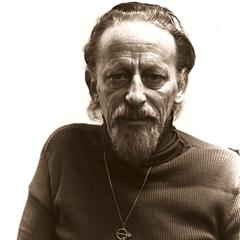
Theodore Sturgeon
Theodore Sturgeon

Theodore Sturgeon (February 26, 1918 – May 8, 1985) was an American science fiction writer and short story master, known for his unique narrative style and profound humanistic concerns. Born in Staten Island, New York, as Edward Hamilton Waldo, he later adopted his stepfather's surname. Active from the 1940s to the 1970s, Sturgeon wrote classic stories like 'Microcosmic God' and 'More Than Human,' and coined 'Sturgeon's Law'—'90% of science fiction is crud, but then 90% of everything is crud.' His works explored human nature, emotion, and social margins, deeply influencing later SF. He won Hugo and Nebula Awards and is often called 'the Shakespeare of science fiction.' more

You May Also Like

“The most important fact about American liberty is that it has never been a single idea, but a set of different and even contrary traditions in creative tension with one another. This diversity of libertarian ideas has created a culture of freedom which is more open and expansive than any unitary tradition alone could possibly be.”

“Maybe philosophical problems are hard not because they are divine or irreducible or meaningless or workaday science, but because the mind of Homo sapiens lacks the cognitive equipment to solve them. We are organisms, not angels, and our minds are organs, not pipelines to the truth. Our minds evolved by natural selection to solve problems that were life-and-death matters to our ancestors, not to commune with correctness ot to answer any question we are capable of asking.”

“The appearance of strength is all about you. It would seem to last forever. However... the rotten tree-trunk, until the very moment when the storm-blast breaks it in two, has all the appearance of might it ever had. The storm-blast whistles through the branches of the Empire even now. Listen... and you will hear the creaking.”

“The theoretical fruits of deliberate oversimplification through idealization are not to be denied... Reality in all its messy particularity is too complicated to theorize about, taken straight. The issue is, rather (since every idealization is a strategic choice), which idealizations might really shed some light... which will just land us... diverting fairy tales.”