Quotessence
Home / Quotes / Quote by Christopher Hitchens

Quote by Christopher Hitchens

“Populists (and 'national socialists') look at the supposedly secret deals that run the world 'behind the scenes'. Child's play. Except that childishness is sinister in adults.”

Quote by Christopher Hitchens

Author
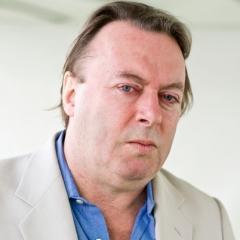
Christopher Hitchens

Christopher Hitchens was an English-American author, journalist, and social critic. He was known for his sharp wit and controversial views, particularly on religion and politics. Hitchens was a prominent figure in the public discourse of the late 20th and early 21st centuries. more

You May Also Like

“National Socialism was a revulsion by my friends against parliamentary politics, parliamentary debate, parliamentary government—against all the higgling and the haggling of the parties and the splinter parties, their coalitions, their confusions, and their conniving. It was the final fruit of the common man's repudiation of "the rascals". Its motif was, "Throw them all out.”

“Except for Christianity, the Nazis reject as Jewish everything which stems from Jewish authors. This condemnation includes the writings of those Jews who, like Stahl, Lassalle, Gumplowicz, and Rathenau, have contributed many essential ideas to the system of Nazism. But the Jewish mind is, as the Nazis say, not limited to the Jews and their offspring only. Many “Aryans” have been imbued with Jewish mentality—for instance the poet, writer, and critic Gotthold Ephraim Lessing, the socialist Frederick Engels, the composer Johannes Brahms, the writer Thomas Mann, and the theologian Karl Barth. They too are damned. Then there are whole schools of thought, art, and literature rejected as Jewish. Internationalism and pacifism are Jewish, but so is warmongering. So are liberalism and capitalism, as well as the “spurious” socialism of the Marxians and of the Bolsheviks. The epithets Jewish and Western are applied to the philosophies of Descartes and Hume, to positivism, materialism and empiro-criticism, to the economic theories both of the classics and of modern subjectivism. Atonal music, the Italian opera style, the operetta and the paintings of impressionism are also Jewish. In short, Jewish is what any Nazi dislikes. If one put together everything that various Nazis have stigmatized as Jewish, one would get the impression that our whole civilization has been the achievement only of Jews.”

“Literature has sometimes flourished under despotic regimes, but, as has often been pointed out, the despotisms of the past were not totalitarian. Their repressive apparatus was always inefficient, their ruling classes were usually either corrupt or apathetic or half-liberal in outlook, and the prevailing religious doctrines usually worked against perfectionism and the notion of human infallibility. Even so it is broadly true that prose literature has reached its highest levels in periods of democracy and free speculation. What is new in totalitarianism is that its doctrines are not only unchallengeable but also unstable. They have to be accepted on pain of damnation, but on the other hand, they are always liable to be altered on a moment’s notice. Consider, for example, the various attitudes, completely incompatible with one another, which an English Communist or ‘fellow-traveler’ has had to adopt toward the war between Britain and Germany. For years before September, 1939, he was expected to be in a continuous stew about ‘the horrors of Nazism’ and to twist everything he wrote into a denunciation of Hitler: after September, 1939, for twenty months, he had to believe that Germany was more sinned against than sinning, and the word ‘Nazi’, at least as far as print went, had to drop right out of his vocabulary. Immediately after hearing the 8 o’clock news bulletin on the morning of June 22, 1941, he had to start believing once again that Nazism was the most hideous evil the world had ever seen. Now, it is easy for the politician to make such changes: for a writer the case is somewhat different. If he is to switch his allegiance at exactly the right moment, he must either tell lies about his subjective feelings, or else suppress them altogether. In either case he has destroyed his dynamo. Not only will ideas refuse to come to him, but the very words he uses will seem to stiffen under his touch. Political writing in our time consists almost entirely of prefabricated phrases bolted together like the pieces of a child’s Meccano set. It is the unavoidable result of self-censorship. To write in plain, vigorous language one has to think fearlessly, and if one thinks fearlessly one cannot be politically orthodox. Totalitarianism, however, does not so much promise an age of faith as an age of schizophrenia…to be corrupted by totalitarianism one does not have to live in a totalitarian country. The mere prevalence of certain ideas can spread a kind of poison that makes one subject after another impossible for literary purposes. Wherever there is an enforced orthodoxy…good writing stops.”