Quotessence
Home / Quotes / Quote by James Madison

Quote by James Madison

“The best reason to be assigned, in this case, for not having made the Constitution more free from a charge of uncertainty in its meaning, is believed to be, that it was not suspected that any such charge would ever take place; and it appears that no such charge did take place, during the early period of the Constitution, when the meaning of its authors could be best ascertained, nor until many of the contemporary lights had in the lapse of time been extinguished. How often does it happen, that a notoriety of intention diminishes the caution against its being misunderstood or doubted!”

Quote by James Madison

Work

1816-1828

This book serves as a chronicle of significant occurrences and societal shifts during the specified period, offering insights into the era's political, social, and cultural landscape. more

Author

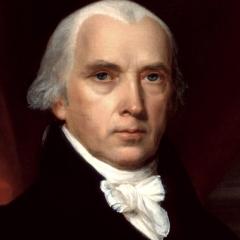
James Madison
James Madison

James Madison, the 4th President of the United States, was born on March 16, 1751, and died on June 28, 1836. He was a key figure in drafting the U.S. Constitution and had a profound impact on the political system of the United States. more

You May Also Like

“It may not be improper, however, to remark two consequences, evidently flowing from an extension of the federal power to every subject falling within the idea of the "general welfare." One consequence must be, to enlarge the sphere of discretion allotted to the executive magistrate... The other consequence would be, that of an excessive augmentation of the offices, honors, and emoluments, depending on the executive will.”

“THE Constitution proposed by the convention may be considered under two general points of view. The FIRST relates to the sum or quantity of power which it vests in the government, including the restraints imposed on the States. The SECOND, to the particular structure of the government, and the distribution of this power among its branches.”

“there ought always to be a constitutional method of giving efficacy to constitutional provisions. What for instance would avail restrictions on the authority of the state legislatures, without some constitutional mode of enforcing the observance of them? . . . This power must either be a direct negative on the state laws, or an authority in the federal courts, to over-rule such as might be in manifest contravention of the articles of union.”

“If our free society is to endure, those who govern must recognize human dignity and accept the enforcement of constitutional limitations on their power conceived by the Framers . . . . Such recognition will not come from a technical understanding of the organs of government, or the new forms of wealth they administer. It requires something different, something deeper-a personal confrontation with the wellsprings of our society.”