“Early on, he'd learned to enjoy simple things, things that couldn't be bought, and he had a hard time understanding people who felt otherwise.”
Quote by Nicholas Sparks
Work
The Notebook: Student edition
This student edition of 'The Notebook' is a revised version of the original novel, designed to be accessible to younger audiences. It includes simplified language and supplementary materials to aid in comprehension and learning. The story, while retaining the essence of the original, may be tailored to suit the educational needs of students. more
Author
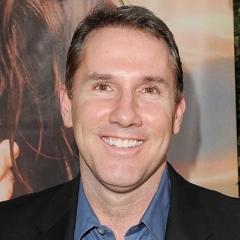
Nicholas Sparks
Nicholas Sparks, born on December 31, 1965, is an American novelist renowned for his romantic and emotionally rich stories. His works often explore themes of love, family, and the meaning of life, and have gained widespread popularity among readers. Sparks' novels have frequently topped bestseller lists globally, and have been translated into multiple languages. His works have also been adapted into numerous films, such as 'Titanic' and 'The Notebook'. more
You May Also Like
Source: A Gentle Thunder: Hearing God Through the Storm
“If you desire healing, let yourself fall ill let yourself fall ill.”
Source: The Spiritual Poems of Rumi
“I can’t write five words but that I change seven.”
Source: Not Much Fun: The Lost Poems of Dorothy Parker
“I was nearly unnerved at my proximity to a nameless thing at the bottom of a pit.”
Source: THE WEIRD TALES of H. P. Lovecraft: At the Mountains of Madness, The Call of Cthulhu, The Whisperer in Darkness, The Shunned House, The Outsider, Pickmanäó»s Model, The Picture in the House, The Templeäó_: The Greatest Tales of Horror & Macabre: The Cats of Ulthar, The Shadow over Innsmouth, The Colour Out of Space, The Horror at Red Hook, The Strange High House in the Mist, From Beyond, Dagonäó_
Source: Mine Till Midnight