Quotessence
Home / Quotes / Quote by Rudolf Arnheim

Quote by Rudolf Arnheim

“Television is a new, hard test of our wisdom. If we succeed in mastering the new medium it will enrich us. But it can also put our mind to sleep. We must not forget that in the past the inability to transport immediate experience and to convey it to others made the use of language necessary and thus compelled the human mind to develop concepts. For in order to describe things one must draw the general from the specific; one must select, compare, think. When communication can be achieved by pointing with the finger, however, the mouth grows silent, the writing hand stops, and the mind shrinks.”

Quote by Rudolf Arnheim

Work

Film as Art

This book delves into the philosophical and technical aspects of film, analyzing its role in culture and the unique qualities that set it apart from other art forms. It examines the contributions of directors, cinematography, and narrative techniques, offering insights into the artistic potential of cinema. more

Author

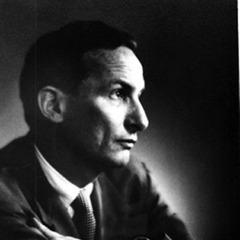
Rudolf Arnheim
Rudolf Arnheim

Rudolf Arnheim was a renowned art theorist and psychologist, known for his profound insights into visual art and aesthetic experience. His work spans various fields including art psychology, film theory, and visual culture. more

You May Also Like

“Some popular quotations smell of airless closets. They exhale the stale imagination of the intellectual lower middle class. "Suspension of disbelief" has become one of them. Dressed up as a scintillating double negation, it serves the pedestrian notion of art as illusion.”

“It would be most wholesome if for at least twenty years art historians were forbidden to refer to any derivations. If they were not allowed to account for a work of art mainly by tracing where it comes from, they would have to deal with it in and by itself--which is what they are most needed for.”

“Orderliness by itself is not sufficient to account for the nature of organized systems in general or for those created by man in particular. Mere orderliness leads to increasing impoverishment and finally to the lowest possible level of structure, no longer clearly distinguishable from chaos, which is the absence of order. A counterprinciple is needed, to which orderliness is secondary. It must supply what is to be ordered.”