Quotessence
Home / Quotes / Quote by John Greenleaf Whittier

Quote by John Greenleaf Whittier

“So all night long the storm roared on: The morning broke without a sun; In tiny spherule traced with lines Of Nature’s geometric signs, In starry flake, and pellicle, All day the hoary meteor fell; And, when the second morning shone, We looked upon a world unknown, On nothing we could call our own. Around the glistening wonder bent The blue walls of the firmament, No cloud above, no earth below,— A universe of sky and snow!”

Quote by John Greenleaf Whittier

Work

Poems of Nature, Poems Subjective and Reminiscent and Religious Poems, Complete Volume II., the Works of Whittier

John Greenleaf Whittier's second volume of poetry showcases his talent in capturing the beauty and depth of the natural world, personal emotions, and spiritual beliefs. This collection delves into the subjective experiences of the poet, offering a glimpse into his introspective and religious views. more

Author
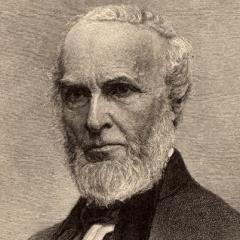
John Greenleaf Whittier

John Greenleaf Whittier was an American poet known for his sympathy towards the working class and his advocacy for social justice. His poetry extensively covered social, political, and moral issues, profoundly influencing American literature in the 19th century. more

You May Also Like

“Love is like the wild rose-briar; Friendship like the holly-tree. The holly is dark when the rose-briar blooms, But which will bloom most constantly? The wild rose-briar is sweet in spring ,Its summer blossoms scent the air; Yet wait till winter comes again, And who will call the wild-briar fair? Then, scorn the silly rose-wreath now, And deck thee with holly's sheen, That, when December blights thy brow, He still may leave thy garland green.”

“I have a similar affection for the parenthesis (but I always take most of my parentheses out, so as not to call undue attention to the glaring fact that I cannot think in complete sentences, that I think only in short fragments or long, run-on thought relays that the literati call stream of consciousness but I still like to think of as disdain for the finality of the period).”

“The hardest lesson is Clare’s solitude. Sometimes I come home and Clare seems kind of irritated; I’ve interrupted some train of thought, broken into the dreary silence of her day. Sometimes I see an expression on Clare’s face that is like a closed door. She has gone inside the room of her mind and is sitting there knitting or something. I’ve discovered that Clare likes to be alone. But when I return from time traveling she is always relieved to see me.”

“Experience shows that Being is the essential, basic nature of the mind; but, since It commonly remains in tune with the senses projecting outwards toward the manifested realms of creation, the mind misses or fails to appreciate its own essential nature, just as the eyes are unable to see themselves.”

“People with self-respect exhibit a certain toughness, a kind of moral nerve; they display what was once called *character,* a quality which, although approved in the abstract, sometimes loses ground to the other, more instantly negotiable virtues.... character--the willingness to accept responsibility for one's own life--is the source from which self-respect springs.”