Quotessence
Home / Quotes / Quote by Martin Buber

Quote by Martin Buber

Author

Martin Buber
Martin Buber

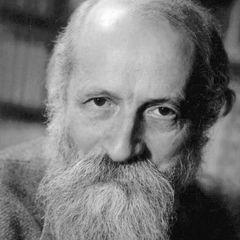
Martin Buber was a German philosopher known for his profound insights into human relationships. His work 'I and Thou' explored the direct relationship between individuals, which had a profound impact on existentialism and philosophical anthropology. more

You May Also Like

“And always we had wars, and more wars, and still other wars - all over Europe, all over the world. "Sometimes in the private interest of royal families," Satan said, "sometimes to crush a weak nation; but never a war started by the aggressor for any clean purpose - there is no such war in the history of the race."”

“After attending a banquet honoring the 1974 BYU team that won the Western AthleticConference and went to the Fiesta Bowl. It was the first of Edwards' 18 WAC champions and 21 bowl teams. That was the group of kids that totally changed the direction of my life and the direction of our football program. We started 0-3-1 and won seven or eight in a row. They were the first bowl team in school history. I hadn't really accomplished anything yet. To see all those guys reminded me where we've been. It was an emotional night.”

“There is not a truth to be gathered from history more certain, or more momentous, than this: that civil liberty cannot long be separated from religious liberty without danger, and ultimately without destruction to both. Wherever religious liberty exists, it will, first or last, bring in and establish political liberty.”

“History shows that great economic and social forces flow like a tide over communities only half conscious of that which is befalling them. Wise statesmen foresee what time is thus bringing, and try to shape institutions and mold men's thoughts and purposes in accordance with the change that is silently coming on. The unwise are those who bring nothing constructive to the process, and who greatly imperil the future of mankind by leaving great questions to be fought out between ignorant change on one hand and ignorant opposition to change on the other.”

“By this time, like one who had set out on his way by night, and travelled through a region of smooth or idle dreams, our history now arrives on the confines, where daylight and truth meet us with a clear dawn, representing to our view, though at a far distance, true colours and shapes.”