Quotessence
Home / Quotes / Quote by George Steiner

Quote by George Steiner

Work

Real Presences: Is There Anything in What We Say?

This book delves into the philosophical and linguistic aspects of human communication, questioning the depth and authenticity of language use and its implications on our understanding of reality. more

Author
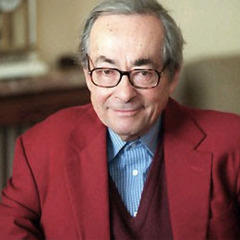
George Steiner
George Steiner

George Steiner is an esteemed literary critic, born on April 23, 1929. His work spans a wide range of literary fields, including novels, poetry, drama, and philosophy. more

You May Also Like

“What I affirm is the intuition that where God's presence is no longer a tenable supposition and where His absence is no longer a felt, indeed overwhelming weight, certain dimensions of thought and creativity are no longer attainable. And I would vary Yeats's axiom so as to say: no man can read fully, can answer answeringly to the aesthetic, whose "nerve and blood" are at peace in sceptical rationality, are now at home in immanence and verification. We must read as if.”

“But I would like to think for a moment about a man who in the morning teaches his students that a false attribution of a Watteau drawing or an inaccurate transcription of a fourteenth-century epigraph is a sin against the spirit and in the afternoon or evening transmits to the agents of Soviet intelligence classified, perhaps vital information given to him in sworn trust by his countrymen and intimate colleagues. What are the sources of such scission? How does the spirit mask itself?”

“Talk can neither be verified nor falsified in any rigorous sense. This is an open secret which hermeneutics and aesthetics, from Aristotle to Croce, have laboured to exorcise or to conceal from themselves and their clients. This ontological, which is to say both primordial and essential axiom (or platitude) of ineradicable undecidability needs, none the less, to be closely argued.”

“Cheap music, childish images, the vulgate in language, in its crassest sense, can penetrate to the deeps of our necessities and dreams. It can assert irrevocable tenure there. The opening bars, the hammer-beat accelerando of Edith Piaf's Je ne regrette rien - the text is infantile, the tune stentorian, and the politics which enlisted the song unattractive - tempt every nerve in me, touch the bone with a cold burn and draw me into God knows what infidelities to reason, each time I hear the song, and hear it, uncalled for, recurrent inside me.”