Quotessence
Home / Quotes / Quote by Sherwood Anderson

Quote by Sherwood Anderson

“From being quite sure of himself and his future he becomes not at all sure. If he be an imaginative boy a door is torn open and for the first time he looks out upon the world, seeing, as though they marched in procession before him, the countless figures of men who before his time have come out of nothingness into the world, lived their lives and again disappeared into nothingness. The sadness of sophistication has come to the boy.”

Quote by Sherwood Anderson

Work

Winesburg, Ohio

Winesburg, Ohio is a seminal work of American fiction by Sherwood Anderson, first published in 1919. The book is structured as a series of short stories, each focusing on a different inhabitant of the fictional town of Winesburg. Through these vignettes, Anderson examines themes of loneliness, repression, and the search for connection in a rapidly changing rural America. The stories are linked by the character of George Willard, a young reporter who observes and interacts with the townspeople, many of whom are portrayed as 'grotesques'—individuals whose lives have been distorted by unfulfilled desires or societal pressures. The narrative style is noted for its psychological depth and its influence on later modernist writers. more

Author

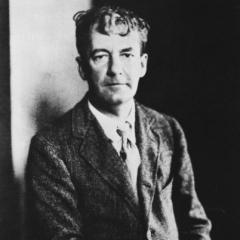
Sherwood Anderson
Sherwood Anderson

American novelist known for his profound insights into the lives of the American middle class. Anderson's works often focus on the inner world and social status of ordinary people, and his style is concise and direct, which has had a profound impact on American literature. more

You May Also Like

“Poetical feelings are a peril to scholarship. There are always poetical people ready to protest that a corrupt line is exquisite. Exquisite to whom? The Romans were foreigners writing for foreigners two millenniums ago; and for people whose gods we find quaint, whose savagery we abominate, whose private habits we don't like to talk about, but whose idea of what is exquisite is, we flatter ourselves, mysteriously identical to ours.”

“Claudia knew that she could never pull off the old-fashioned kind of running away. That is, running away in the heat of anger with a knapsack on her pack. She didn't like discomfort; even picnics were untidy and inconvenient: all those insects and the sun melting the icing on the cupcakes. Therefore, she decided that her leaving home would not be just running from somewhere but would be running to somewhere.”