Quotessence
Home / Quotes / Quote by Jane Austen

Quote by Jane Austen

“Thus much indeed he was obliged to acknowledge - that he had been constant unconsciously, nay unintentionally; that he had meant to forget her, and believed it to be done. He had imagined himself indifferent, when he had only been angry; and he had been unjust to her merits, because he had been a sufferer from them.”

Quote by Jane Austen

Work

Persuasion In Modern English

This book delves into the principles and techniques of persuasion as applied in modern English communication, offering insights into effective strategies for influencing others in various social and professional settings. more

Author
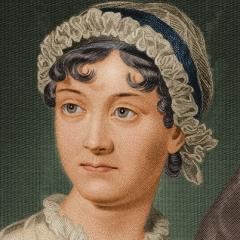
Jane Austen
Jane Austen

Jane Austen, born on December 16, 1775, and died on July 18, 1817, was a renowned English novelist of the 19th century. Known for her exquisite psychological portrayals and satirical humor, Austen's works mainly revolve around rural life in England, depicting the customs and interpersonal relationships of the time. Her representative works include 'Pride and Prejudice' and 'Sense and Sensibility'. more

You May Also Like

“Afterward, I curl around her. We lie in silence until darkness falls, and then, haltingly, she begins to talk...She speaks without need or even room for response, so I simply hold her and stroke her hair. She talks of the pain, grief, and horror of the past four years; of learning to cope with being the wife of a man so violent and unpredictable his touch made her skin crawl and of thinking, until quite recently, that she'd finally managed to do that. And then, finally, of how my appearance had forced her to realize she hadn't learned to cope at all.”

“Let's find and remedy all our weaknesses before our enemies get a chance to say a word. That is what Charles Darwin did. ...When Darwin completed the manuscript of his immortal book "The Origin Of Species" he realized that the publication of his revolutionary concept of creation would rock the intellectual and religious worlds. So he became his own critic and spent another 15 years checking his data, challenging his reasoning, and criticizing his conclusions.”

“But she wouldn't. I knew that already. My mother and I had an understanding: we worked together to be as much in control of our shared world as possible. I was suposed to be her other half, carrying my share of the weight. In the last few weeks, I'd tried to shed it, and doing so sent everything off kilter. So of course she would pull me tighter, keeping me in my place, because doing so meant she would always be sure, somehow, of her own.”

“I got back in my car, starting the engine, then drove off. It wasn't until I pulled onto the highway that it all really sunk it, how temporary our friendship had been. We'd been on our breaks, after all, but it wasn't our relationships that were on pause: it was us. Now we were both in motion again, moving ahead. So what if there were questions left unanswered. Life went on. We knew that better than anyone.”

“I listened for the voice I knew so well, the one I always heard at the beginning. Good girl, Macy! You're doing great! You know the first steps are the hardest part! They were. Sometimes I felt so out of sync, it was all could do not to quit after a few strides. But I kept on, as I did now. I had to, to get to the next part, this part, where I finally caught up with Wes, my shadow aligning itself with his, an dhe turned to look at me, pushing his hair our of his eyes.”