Quotessence
Home / Quotes / Quote by Albert Schweitzer

Quote by Albert Schweitzer

“Reverence for life . . . does not allow the scholar to live for his science alone, even if he is very useful . . . the artist to exist only for his art, even if he gives inspiration to many. . . . It refuses to let the business man imagine that he fulfills all legitimate demands in the course of his business activities. It demands from all that they should sacrifice a portion of their own lives for others.”

Quote by Albert Schweitzer

Author
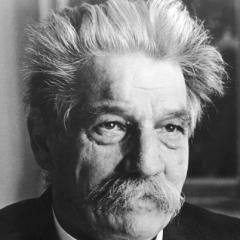
Albert Schweitzer
Albert Schweitzer

Albert Schweitzer, born on January 14, 1875, and died on September 4, 1965, was a German theologian, musician, philosopher, and physician. He is renowned for his missionary work in Africa. more

You May Also Like

“The purpose of seasonal festivals is periodically to revive the topocosm. Gaster coined this word from the Greek - topo for place and cosmos for world order. Topocosm means "the world order of a particular place." The topocosm is the entire complex of any given locality conceived as a living organism, not just the human community but the total community - the plants, animals and soils of the place. The topocosm is not only the actual and present living community but also that continuous entity of which the present community is but the current manifestation.”

“Whenever learners or those beyond learning awaken the mind, for the first time they plant one buddha-nature. Working with the four elements and five clusters, if they practice sincerely they attain enlightenment. Working with plants, trees, fences and walls, if they practice sincerely they will attain enlightenment. This is because the four elements and five clusters and plants, trees, fences and walls are fellow students; because they are of the same essence, because they are the same mind and the same life, because they are the same body and the same mechanism.”

“His epitaph: This tomb hold Diophantus, Ah, what a marvel! And the tomb tells scientifically the measure of his life. God vouchsafed that he should be a boy for the sixth part of his life; when a twelfth was added, his cheeks acquired a beard; He kindled for him the light of marriage after a seventh, and in the fifth year after his marriage He granted him a son. Alas! late-begotten and miserable child, when he had reached the measure of half his father's life, the chill grave took him. After consoling his grief by this science of numbers for four years, he reached the end of his life.”