“And here she was, an old woman now, living and hoping, keeping faith, afraid of evil, full of anxiety for the living and an equal concern for the dead; here she was, looking at the ruins of her home, admiring the spring sky without knowing that she was admiring it, wondering why the future of those she loved was so obscure and the past so full of mistakes, not realizing that this very obscurity and unhappiness concealed a strange hope and clarity, not realizing that in the depths of her soul she already knew the meaning of both her own life and the lives of her nearest and dearest, not realizing that even though neither she herself nor any of them could tell what was in store, even though they all knew only too well that at times like these no man can forge his own happiness and that fate alone has the power to pardon and chastise, to raise up to glory and to plunge into need, to reduce a man to labour- camp dust, nevertheless neither fate, nor history, nor the anger of the State, nor the glory or infamy of battle has any power to affect those who call themselves human beings. No, whatever life holds in store – hard-won glory, poverty and despair, or death in a labour camp – they will live as human beings and die as human beings, the same as those who have already perished; and in this alone lies man's eternal and bitter victory over all the grandiose and inhuman forces that ever have been or will be.”
Quote by Vasily Grossman
Work
Browse quotes and source details for this work. more
Author
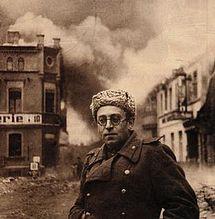
Vasily Grossman (December 12, 1905 – September 14, 1964) was a Soviet Jewish writer and journalist, best known for his works on World War II. Born in Berdychiv, Ukraine, he initially studied chemical engineering before turning to literature. As a war correspondent for the Red Star newspaper, he witnessed the Battle of Stalingrad and documented Nazi atrocities. His masterpiece, Life and Fate, was banned by Soviet authorities for its criticism of Stalinism and only published in the 1980s. Grossman's works explore themes of war, totalitarianism, and humanity, earning him recognition as a significant voice in 20th-century Russian literature. more
You May Also Like
“I am not a person who goes in the side of the many, because I prefer the side of the victor.”
“Stripping her of her name had been almost as satisfying as removing her dress.”
“There are different ways to say or do the same thing, yet the same thing cannot be different.”
“I know God love me, because my enemies don’t triumph over me.”
“Peace is possible for dead bodies, living bodies can not expect peace on the way to the victory.”