Quotessence
Home / Quotes / Quote by Geoffrey Miller

Quote by Geoffrey Miller

Work

Spent: Sex, Evolution, and Consumer Behavior

This book delves into the complex relationship between human sexual behavior, evolutionary theory, and the ways in which individuals make purchasing decisions. It examines how evolutionary pressures have shaped our preferences and behaviors in the context of consumption, offering insights into the psychological and biological underpinnings of consumerism. more

Author
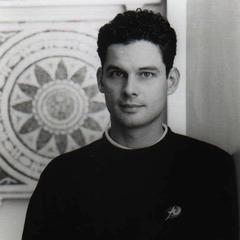
Geoffrey Miller
Geoffrey Miller

Geoffrey Miller is a renowned psychologist born in 1965. His research focuses on evolutionary psychology and human behavior, particularly in areas such as sex and marriage, and art and aesthetics. Miller's books, 'The Mating Mind' and 'Spent: The Dark Side of the All-Consuming Economy', have had a significant impact worldwide. more

You May Also Like

“Though we could always explain that our life was not as glamorous as it might seem in the telling, we did come to realize that we'd made some radical decisions. We also came to realize, however, that the life that was laid before us in that not-so-distant past – becoming an industrial engineer, for example, working fifty hours a week for a car company's profit, getting an abysmal two weeks of vacation a year, never really feeling like your work had any meaning – was its own radical path. In Europe, life was different. Ambition was secondary to leisure; long, conversation-filled meals, the norm. The parks were full of people strolling, not running; cafes with people talking, not doing work on their own solitary computers.”

“As children we got so we could tell time by the sun pretty well, and would know by the light in the room when we opened our eyes that it was seven o'clock and time to get  up for school, and later that it was almost ten and then almost noon and almost three o'clock and time to be dismissed. School ran strictly by clocks, the old Regulatorsthat Mr. Hamburger was always fiddling with, adding and subtracting paper clips on the pendulum to ahieveperfect time, but we were sensitive to light, knowing how little was available to us as winter came on, and always knew what time it was - as anyone will who leads a regular life in a familiar place. My poor great-grandpa,when his house burned down when Grandma left the bread baking in the summer kitchen oven to go visit the Berges and they built the new one facing west instead of south: they say he was confused the test of his life and never got straightened out even when he set up his bed in the parlor ( which faced north as his former bedroom had): he lived in a twilight world for some time and 5hen moved in his mind to the house he'd grown up in, and in the end didn't know one day from another until he died." Yea, though I walk through the valley of the shadow of death, I will fear no evil," but there's more than one kind of of shadow, and when a man loses track, it can kill him. Not even the siren could have saved my great- grandpa. He died of misdirection. " /”

“Haley was a fierce critic of industrial elites, telling a crowd, "Two ideals are struggling for supremacy in American life today; one the industrial ideal dominating through the superiority of commercialism, which subordinates the worker to the product and the machines; the other, the ideal of democracy, the ideal of the educators, which places humanity above all machines, and demands that all activity shall be the expression of life.”

“To remind him, and perhaps myself, that any hope for the future depends on our ability to reclaim the narrative of a long con- tinuum of resistance that has been the foundation of our country and the bulwark against the very forces that have threatened our democracy since its founding.”

“Third, resistance is a tradition of building blocks; a continuum of action that may not have dislodged injustice in its own time, but whose revolutionary founders left behind the framework and tools for a subsequent generation to take up, and ultimately carry out its vision. We can stand back and admire certain laws and protections now—child labor laws, voter enfranchisement for all, an eight-hour work day, clean water, for example—and appreciate the irreversible process of resistance that not only guaranteed their formation, but fought off the innumerable attacks that once kept them from rising.”

“Fourth, resistance, as it has unfolded over the centuries, has claimed a “public commons” for “we the people” to have a voice in shaping the de- fining issues in our most trying times—beyond the thirty-nine wealthy white men who signed our Constitution. This means beyond elections.”

“Resistance, as an American credo, blossomed from the seed-time of our American Revolution as a universal right, not simply some random act to “disrupt civil order and stability” or fleeting moments of dissent or vague calls for freedom, as often defined. Resistance, over the centuries, has endowed a “public commons” for “we the people” to have a voice in framing the defining issues in our most trying times. And while those defining issues have remained unresolved, in many respects— expanding the protection of life, liberty, and the pursuit of happiness for all; defending the right of free speech and freedom of the press as inalienable—they have taken new forms in an age of nuclear weapons and climate change.”