Quotessence
Home / Quotes / Quote by Christopher Hitchens

Quote by Christopher Hitchens

“Call no man lucky until he is dead, but there have been moment of rare satisfaction in the often random and fragmented life of the radical freelance scribbler. I have lived to see Ronald Reagan called “a useful idiot for Kremlin propaganda” by his former idolators; to see the General Secretary of the Communist Party of the Soviet Union regarded with fear and suspicion by the Communist Party of Czechoslovakia (which blacked out an interview with Miloš Forman broadcast live on Moscow TV); to see Mao Zedong relegated like a despot of antiquity. I have also had the extraordinary pleasure of revisiting countries—Greece, Spain, Zimbabwe, and others—that were dictatorships or colonies when first I saw them. Other mini-Reichs have melted like dew, often bringing exiled and imprisoned friends blinking modestly and honorably into the glare. E pur si muove—it still moves, all right.”

Quote by Christopher Hitchens

Work

Prepared for the Worst: Selected Essays and Minority Reports

This book compiles a selection of essays and minority reports, offering a diverse range of viewpoints on contemporary societal challenges and debates. more

Author
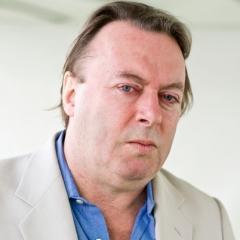
Christopher Hitchens

Christopher Hitchens was an English-American author, journalist, and social critic. He was known for his sharp wit and controversial views, particularly on religion and politics. Hitchens was a prominent figure in the public discourse of the late 20th and early 21st centuries. more

You May Also Like

“Well, you're free without wanting to be,' he explained, 'it just happens so, that's all. But Mathieu's freedom is based on reason.' 'I still don't understand,' said Lola, shaking her head. 'Well, he doesn't care a curse about his apartment: he lives there just as he would live anywhere else, and I've got the feeling that he doesn't care much about his girl. He stays with her because he must sleep with someone. His freedom isn't visible, it's inside him.”

“...freedom is of more account than the height of a roof beam. I ought to know; mine cost me eighteen years' slavery. The man who lives on his own land is an independent man. He is his own master. If I can keep my sheep alive through winter and can pay what has been stipulated from year to year - then I pay what has been stipulated; and I have kept my sheep alive. No, it is freedom that we are all after, Titla. He who pays his way is a king. He who keeps his sheep alive through the winter lives in a palace.”

“I, as an anarch, renouncing any bond, any limitation of freedom, also reject compulsory education as nonsense. It was one of the greatest well-springs of misfortune in the world. Compulsory schooling is essentially a means of curtailing natural strength and exploiting people. The same is true of military conscription, which developed within the same context. The anarch rejects both of them - just like obligatory vaccination and insurance of all kinds. He has reservations when swearing an oath. He is not a deserter, but a conscientious objector.”

“The forest rebel and the partisan are not, as I have said, to be confused with each other; the partisan fights in society, the forest rebel alone. Nor, on the other hand, is the forest rebel to be confused with the anarch, although the two of them grow very similar for a while and are barely to be distinguished in existential terms. The difference is that the forest rebel has been expelled from society, while the anarch has expelled society from himself. He is and remains his own master in all circumstances. When he decides to flee to the forest, his decision is less an issue of justice and conscience for him than a traffic accident. He changes camouflage; of course, his alien status is more obvious in the forest passage thereby making it the weaker form, though perhaps indispensable.”

“Anon from the castle walls The crescent banner falls, And the crowd beholds instead, Like a portent in the sky, Iskander's banner fly, The Black Eagle with double head; And a shout ascends on high, For men's souls are tired of the Turks, And their wicked ways and works, That have made of Ak-Hissar A city of the plague; And the loud, exultant cry That echoes wide and far Is: "Long live Scanderbeg!”

“Everybody talks about freedom, citizens," the big man said gently, seeming to draw upon that very sure source of personal knowledge again, "but they dont really want it. Half of them wants it but the other half dont. What they really want is to maintain an illusion of freedom in front of their wives and business associates. Its a satisfactory compromise, and as long they can have that they can get along without the other which is more expensive. The only trouble is, every man who declares himself free to his friends has to make a slave out of his wife and employees to keep up the illusion and prove it; the wife to be free in front of her bridgeclub has to command her Help, Husband and Heirs. It resolves itself into a battle; whoever wins, the other one loses. For every general in this world there have to be 6,000 privates.”

“He kept thinking about Mary. What a fool he'd been to let her go. To think, with the thoughtless assurance of youth, that the world was replete with endless possibilities. He'd thought it a mistake to choose so early in life and embrace the present good. He'd been a great one for looking for greener pastures. He'd kept looking until all his pastures were brown with time. ("Old Haunts")”