Quotessence
Home / Quotes / Quote by Jean Baudrillard

Quote by Jean Baudrillard

“In the end, all of this comes from the desire to be Nothing and to be looked at as such. There are two manners of disappearing: either we demand not to be seen (this is the current problem concerning image rights), or we immerse ourselves in the delirious exhibitionism of its nullity. We make ourselves nothing, a loser, in order to be seen as nothing - the ultimate protection against the necessity of existing and the obligation of being one’s self. It is from this that we get the simultaneous contradictory situation of not being seen and being perpetually visible. Everyone wants it both ways, and no legislation or ethics can get to the bottom of this dilemma - the unconditional right of being able to view and at the same time to not be viewed in return. Complete information access is part of human rights and with it we also find a forced visibility and over-exposure to the lighting of information.”

Quote by Jean Baudrillard

Work

Telemorphosis

Browse quotes and source details for this work. more

Author
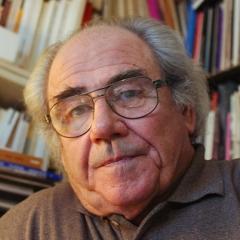
Jean Baudrillard
Jean Baudrillard

Jean Baudrillard was a French philosopher known for his critical studies on consumerism, media, and semiotics. His theories have had a profound impact on postmodernism and cultural studies. more

You May Also Like

“For months the previous year she had monitored message boards for suggestions of terrorist activity, and while she'd never entirely thrown off the suspicion that every other poster she encountered was an undercover cop, she'd grown used to eavesdropping on tin-hat conversations, from how the government was controlling the weather to the thought-experiments carried out on anyone who rang HMRC helplines. And all of these philosophers, without exception, were convinced they were under surveillance, their every online foray or mobile chat recorded and stored for future use. That this was probably true was an irrelevance, of course; they were simply caught in the same net as everyone else. Louisa had never trapped a terrorist; never stopped a bomb. She'd read it lot of discussions about 9/11, obviously, but contributions from structural engineers had been conspicuous by their absence. And while the helpline thing wag probably true, that was just the law of averages at work.”

“However, this court is constrained by law, and under the law, I can only conclude that the Government has not violated FOIA by refusing to turn over the documents sought in the FOIA requests, and so cannot be compelled by this court of law to explain in detail the reasons why its actions do not violate the Constitution and the laws of the United States. The Alice-in-Wonderland nature of this pronouncement is not lost on me; but after careful and extensive consideration, I find myself stuck in a paradoxical situation in which I cannot solve a problem because of contradictory constraints and rules—a veritable Catch-22. I can find no way around the thicket of laws and precedents that effectively allow the Executive Branch of our Government to proclaim as perfectly lawful certain actions that seem on their face incompatible with our Constitution and laws, while keeping the reasons for their conclusion a secret.”

“Many scientific disciplines begin by not observing any sort of vital spark or consciousness in material events and proceed to deny that these things exist in living things, including themselves. Because consciousness does not fit into their mechanistic schemes they declare it illusory. Magicians make exactly the reverse argument. Observing consciousness in themselves and animals, they are magnanimous enough to extend it to all things to some degree—trees, amulets, planetary bodies, and all. This is a far more respectful and generous attitude than that of religions, most of whom won't even give animals a soul.”

“Our definition of an atheist as someone who denies perfection has an immediate corollary; he is also someone who denies meaning. If you think about it, meaning is entirely invested in perfection. We expect a perfect being to know the meaning of existence, and be capable of telling us. We expect a perfect evolutionary process to culminate with we ourselves being perfect and knowing everything. Our pursuit of perfection/God is the meaning of life. To be an atheist is to reject perfection, hence reject meaning. That’s why we brand all atheists as nihilists. They don’t believe in anything. They don’t believe in meaning. And that makes them no different from machines. They are not living beings, or they refuse to be living beings. They are unquestionably high on the autistic spectrum, and they see themselves and the universe as machines rather than living, evolving organisms, getting more and more perfect.”

“Science used to claim it understood the universe fairly well. Now it says that 95% of the universe is unknown to science. Anyone who scored 5% in a science exam would not be allowed to do science. Yet worshippers of scientism believe they are permitted to pontificate on the nature of reality despite being a 95% epic fail. They literally don’t know anything. Even their 5% of supposed knowledge is absurd since the remaining 95% is exceptionally unlikely to offer a defense of the 5%. Science – the Swiss Cheese System. It’s full of holes. It’s springing leaks everywhere. The rats are jumping off the sinking ship.”

“You can never get enough generality. The more general solution the better. The solution to existence is the most general solution of all, the solution least infected by particularity. That is its defining quality. The entire way of thinking mathematically – in terms of simplicity, generality, tautology, elegance, beauty, stability, the eternal, the necessary, coherence, the analytic, the a priori – is totally different from the way a scientist thinks, which is always mired in particularity, inelegance, ugliness, the temporal, the contingent, the ad hoc, the arbitrary, the heuristic, the speculative; in Feynman’s crude guessing game.”