“Apparently, if you look at how many numbers we're likely to store in our mobile phone, or how many names we're likely to list on a social networking site, it's rare even for city dwellers to exceed a couple of hundred. Social anthropologists delightedly point out that this is the size of the social group we would have had to handle in a large Stone Age village. According to them, we're all trying to cope with modern big-city life equipped only with a Stone Age social brain. We all struggle with anonymity.”
Quote by Neil MacGregor
Work
A History of the World in 100 Objects
Browse quotes and source details for this work. more
Author
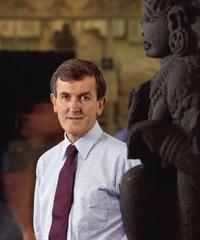
Neil MacGregor
Neil MacGregor is a renowned British museum director known for his profound understanding and exceptional contributions to museum culture. He has extensive experience in museum management, exhibition planning, and public education. more
You May Also Like
“Let the grace you receive shape the way you treat yourself.”
Source: The Light in the Heart
“Coaching is personal. Consulting is organizational. Training is grouped.”
“If one person decides to change, the whole group will change.”
“The inevitable fate of large groups is to perish because of lack of unity.”
Source: Aphorisms and Thoughts
Source: Charlie Chaplin: A Brief Life
Source: The Creation of Me, Them and Us
Source: We Need to Hang Out: A Memoir of Making Friends
“Don't do for a group what a group can do for itself.”
Source: Let's Stop Meeting Like This: Tools to Save Time and Get More Done
Source: Always Look on the Bright Side of Life: A Sortabiography