“In questions of law or of fact conscience is very often confounded with opinion. No man's conscience can tell him the rights of another man; they must be known by rational investigation or historical inquiry.”
Quote by Samuel Johnson
Work
The works of Samuel Johnson, LL. D.: with an essay on his life and genius
This volume presents a curated selection of Samuel Johnson's literary works, showcasing his extensive range of writing styles and his significant influence on the English language. The collection includes his renowned dictionary, essays, and poetry, alongside critical analyses of his work. An introductory essay provides insight into Johnson's life and the context of his genius, offering readers a deeper understanding of his legacy. more
Author
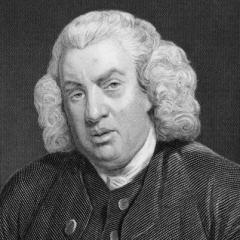
Samuel Johnson
Samuel Johnson was an English writer, poet, and lexicographer, renowned for his comprehensive English dictionary, 'A Dictionary of the English Language', published in 1755. His distinctive writing style and wit have cemented his place as a significant figure in the history of English literature. more
You May Also Like
“Quis costodiet ipsos custodies? (Who will watch the watchers?)”
Source: The Rubaiyat of Omar Khayyam
“There are no lost causes because there are no gained causes.”
Source: America's British Culture
“The means prepare the end, and the end is what the means have made of it.”