Quotessence
Home / Quotes / Quote by Marcus Tullius Cicero

Quote by Marcus Tullius Cicero

Work

Delphi Complete Works of Cicero (Illustrated)

The Delphi Complete Works of Cicero (Illustrated) is a scholarly compilation that brings together the extensive corpus of Cicero's writings. The collection encompasses his oratory, correspondence, and philosophical treatises, offering insight into the political and intellectual life of ancient Rome. The illustrated edition aims to make the texts more accessible and engaging for modern readers. more

Author
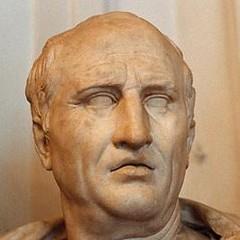
Marcus Tullius Cicero

Marcus Tullius Cicero was a prominent philosopher, politician, lawyer, orator, and writer during the late Roman Republic. The exact dates of his birth and death are unknown, but he was active in the 1st century BC. Known for his profound thoughts and exceptional literary style, Cicero has had a lasting impact on Western culture. more

You May Also Like

“Cultural survival is not about preservation, sequestering indigenous peoples in enclaves like some sort of zoological specimens. Change itself does note destroy a culture. All societies are constantly evolving. Indeed a culture survives when it has enough confidence in its past and enough say in its future to maintain its spirit and essence through all the changes it will inevitably undergo.”

“If diversity is a source of wonder, its opposite - the ubiquitous condensation to some blandly amorphous and singularly generic modern culture that takes for granted an impoverished environment - is a source of dismay. There is, indeed, a fire burning over the earth, taking with it plants and animals, cultures, languages, ancient skills and visionary wisdom. Quelling this flame, and re-inventing the poetry of diversity is perhaps the most important challenge of our times.”

“Upon the whole, therefore, she found, what has been sometimes found before, that an event to which she had looked forward with impatient desire, did not in taking place, bring all the satisfaction she had promised herself. It was consequently necessary to name some other period for the commencement of actual felicity; to have some other point on which her wishes and hopes might be fixed, and by again enjoying the pleasure of anticipation, console herself for the present, and prepare for another disappointment.”