Quotessence
Home / Quotes / Quote by Sarah Josepha Hale

Quote by Sarah Josepha Hale

“Democracies have been, and governments called, free; but the spirit of independence and the consciousness of unalienable rights, were never before transfused into the minds of a whole people....The feeling of equality which they proudly cherish does not proceed from an ignorance of their station, but from the knowledge of their rights; and it is this knowledge which will render it so exceedingly difficult for any tyrant ever to triumph over the liberties of our country.”

Quote by Sarah Josepha Hale

Work

Ladies' Magazine

Ladies' Magazine is a historical periodical that catered to the interests of women, including fashion trends, social etiquette, and household management. It provided a platform for women to read about contemporary issues and engage with content tailored to their interests. more

Author

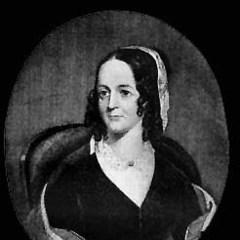
Sarah Josepha Hale
Sarah Josepha Hale

Sarah Josepha Hale was an American writer, born on October 24, 1788, and died on April 30, 1879. She is known for her contributions to women's education and social reform, most notably for her work 'Mary Baker Eddy's Gift', which later became the prototype of the American Santa Claus. more

You May Also Like

“The idea that each individual has intrinsic, God-given value and is of infinite worth quite apart from any social contribution - an idea most pagans would have rejected as absurd - persists today as the ethical basis of western law and politics. Our secularized western idea of democratic society owes much to that early Christian vision of a new society - a society no longer formed by the natural bonds of family, tribe, or nation but by the voluntary choice of its members.”

“Our real battlefield today is Asia and our real battle is the one between democracy and communism. . . . We have to prove to the world and particularly to downtrodden areas of the world which are the natural prey to the principles of communist economics that democracy really brings about happier and better conditions for the people as a whole.”

“It is obvious that the most despotic forms of social organization would be suitable for inert men who are satisfied with the situation fate has placed them in, and that the most abstract form of democratic theory would be practicable among sages guided only by their reason. The only problem is to what degree it is possible to excite or to contain the passions without endangering public happiness.”