Quotessence
Home / Quotes / Quote by Sri Aurobindo

Quote by Sri Aurobindo

Work

Essays on the Gita

This book delves into the profound teachings and philosophical insights found within the Bhagavad Gita, offering critical analysis and interpretations of its verses and concepts. more
Author

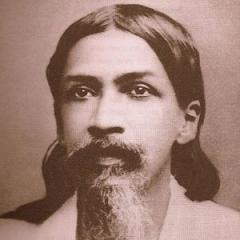
Sri Aurobindo
Sri Aurobindo

Sri Aurobindo, a philosopher, poet, and politician from India, was born on August 15, 1872, and passed away on December 5, 1950. He is renowned for his profound philosophical thoughts and his contributions to the spiritual revival of India. more

You May Also Like

“i like my body when it is with your body. It is so quite new a thing. Muscles better and nerves more. i like your body. i like what it does, i like its hows. i like to feel the spine of your body and its bones, and the trembling -firm-smooth ness and which i will again and again and again kiss, i like kissing this and that of you, i like, slowly stroking the, shocking fuzz of your electric fur, and what-is-it comes over parting flesh ... And eyes big love-crumbs, and possibly i like the thrill of under me you so quite new.”

“Every spirit passing through the world fingers the tangible and mars the mutable and finally has come to look and not to buy. So shoes are worn and hassocks are sat upon and finally everything is left where it was and the spirit passes on, just as the wind in the orchard picks up the leaves from the ground as if there were no other pleasure in the world but brown leaves, as if it would deck, clothe, flesh itself in flourishes of dusty brown apple leaves and then drops them all in a heap at the side of the house and goes on.”

“But let there be no misunderstanding: it is not that a real man, the object of knowledge, philosophical reflection or technological intervention, has been substituted for the soul, the illusion of theologians. The man described for us, whom we are invited to free, is already in himself the effect of a subjection more profound than himself. A 'soul' inhabits him and brings him to existence, which is itself a factor in the mastery that power exercises over the body. The soul is the effect and instrument of a political anatomy; the soul is the prison of the body.”