Quotessence
Home / Quotes / Quote by Charles Sanders Peirce

Quote by Charles Sanders Peirce

Work

Collected papers of Charles Sanders Peirce

The Collected Papers of Charles Sanders Peirce is a seminal work that gathers together the extensive and varied writings of one of the most influential thinkers of the 19th century. The collection offers insights into Peirce's contributions to the development of pragmatism, semiotics, and the philosophy of science. It includes his seminal essay 'How to Make Our Ideas Clear,' as well as numerous other works that explore the nature of truth, the role of the individual in knowledge, and the structure of scientific inquiry. more

Author
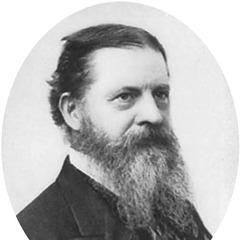
Charles Sanders Peirce

Charles Sanders Peirce was an American philosopher, logician, and scientist, born on September 10, 1839, and died on April 19, 1914. Known as the founder of modern symbolic logic, Peirce's philosophical ideas have had a profound impact on fields such as logic, philosophy of science, and cognitive science. more

You May Also Like

“Truth is that concordance of an abstract statement with the ideal limit towards which endless investigation would tend to bring scientific belief, which concordance the abstract statement may possess by virtue of the confession of its inaccuracy and one-sidedness, and this confession is an essential ingredient of truth.”

“Still, it will sometimes strike a scientific man that the philosophers have been less intent on finding out what the facts are, than on inquiring what belief is most in harmony with their system.”

“We may say that feelings have two kinds of intensity. One is the intensity of the feeling itself, by which loud sounds are distinguished from faint ones, luminous colors from dark ones, highly chromatic colors from almost neutral tints, etc. The other is the intensity of consciousness that lays hold of the feeling, which makes the ticking of a watch actually heard infinitely more vivid than a cannon shot remembered to have been heard a few minutes ago.”

“It is not too much to say that next after the passion to learn there is no quality so indispensable to the successful prosecutionof science as imagination. Find me a people whose early medicine is not mixed up with magic and incantations, and I will find you a people devoid of all scientific ability.”

“The real, then, is that which, sooner or later, information and reasoning would finally result in, and which is therefore independent of the vagaries of me and you. Thus, the very origin of the conception of reality shows that this conception essentially involves the notion of a COMMUNITY, without definite limits, and capable of a definite increase of knowledge.”

“We cannot begin with complete doubt. We must begin with all the prejudices which we actually have when we enter upon the study ofphilosophy. These prejudices are not to be dispelled by a maxim, for they are things which it does not occur to us can be questioned. A person may, it is true, in the course of his studies, find reason to doubt what he began by believing; but in that case he doubts because he has a positive reason for it, and not on account of the Cartesian maxim. Let us not pretend to doubt in philosophy what we do not doubt in our hearts.”

“Do you call it doubting to write down on a piece of paper that you doubt? If so, doubt has nothing to do with any serious business. But do not make believe; if pedantry has not eaten all the reality out of you, recognize, as you must, that there is much that you do not doubt, in the least. Now that which you do not at all doubt, you must and do regard as infallible, absolute truth.”

“Some think to avoid the influence of metaphysical errors, by paying no attention to metaphysics; but experience shows that these men beyond all others are held in an iron vice of metaphysical theory, because by theories that they have never called in question.”