Quotessence
Home / Quotes / Quote by Charles Sanders Peirce

Quote by Charles Sanders Peirce

“Over against any cognition, there is an unknown but knowable reality; but over against all possible cognition, there is only the self-contradictory. In short, cognizability (in its widest sense) and being are not merely metaphysically the same, but are synonymous terms.”

Quote by Charles Sanders Peirce

Work

Peirce on Signs: Writings on Semiotic

'Peirce on Signs: Writings on Semiotic' is a comprehensive compilation of the writings of Charles Sanders Peirce, a prominent American philosopher, logician, and scientist. The book delves into Peirce's extensive work on semiotics, offering a detailed exploration of his ideas on signs, symbols, and their role in human communication. It includes his seminal essays, lectures, and notes, showcasing his development of the semiotic triangle and his contributions to the field of semiotics. The book is a valuable resource for scholars and students of philosophy, linguistics, and communication studies. more

Author
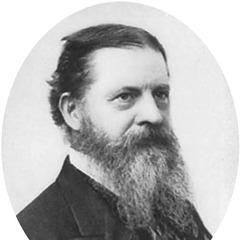
Charles Sanders Peirce

Charles Sanders Peirce was an American philosopher, logician, and scientist, born on September 10, 1839, and died on April 19, 1914. Known as the founder of modern symbolic logic, Peirce's philosophical ideas have had a profound impact on fields such as logic, philosophy of science, and cognitive science. more

You May Also Like

“The real, then, is that which, sooner or later, information and reasoning would finally result in, and which is therefore independent of the vagaries of me and you. Thus, the very origin of the conception of reality shows that this conception essentially involves the notion of a COMMUNITY, without definite limits, and capable of a definite increase of knowledge.”

“We cannot begin with complete doubt. We must begin with all the prejudices which we actually have when we enter upon the study ofphilosophy. These prejudices are not to be dispelled by a maxim, for they are things which it does not occur to us can be questioned. A person may, it is true, in the course of his studies, find reason to doubt what he began by believing; but in that case he doubts because he has a positive reason for it, and not on account of the Cartesian maxim. Let us not pretend to doubt in philosophy what we do not doubt in our hearts.”

“Do you call it doubting to write down on a piece of paper that you doubt? If so, doubt has nothing to do with any serious business. But do not make believe; if pedantry has not eaten all the reality out of you, recognize, as you must, that there is much that you do not doubt, in the least. Now that which you do not at all doubt, you must and do regard as infallible, absolute truth.”

“Some think to avoid the influence of metaphysical errors, by paying no attention to metaphysics; but experience shows that these men beyond all others are held in an iron vice of metaphysical theory, because by theories that they have never called in question.”

“The truth is, that common-sense, or thought as it first emerges above the level of the narrowly practical, is deeply imbued with that bad logical quality to which the epithet metaphysical is commonly applied; and nothing can clear it up but a severe course of logic.”

“It has often been argued that absolute scepticism is self-contradictory; but this is a mistake: and even if it were not so, it would be no argument against the absolute sceptic, inasmuch as he does not admit that no contradictory propositions are true. Indeed, it would be impossible to move such a man, for his scepticism consists in considering every argument and never deciding upon its validity; he would, therefore, act in this way in reference to the arguments brought against him.”

“Theoretically, I grant you, there is no possibility of error in necessary reasoning. But to speak thus "theoretically," is to uselanguage in a Pickwickian sense. In practice, and in fact, mathematics is not exempt from that liability to error that affects everything that man does.”