“Theoretically, I grant you, there is no possibility of error in necessary reasoning. But to speak thus "theoretically," is to uselanguage in a Pickwickian sense. In practice, and in fact, mathematics is not exempt from that liability to error that affects everything that man does.”
Quote by Charles Sanders Peirce
Work
Reasoning and the logic of things: the Cambridge conferences lectures of 1898
Reasoning and the logic of things: the Cambridge conferences lectures of 1898 is a collection of lectures that delve into the intricacies of reasoning and logical thought. The book captures the intellectual discourse of the Cambridge conferences held in 1898, offering insights into the discussions and debates that took place among scholars and thinkers of the time. It serves as a historical document that reflects the state of logic and reasoning studies at the turn of the century. more
Author
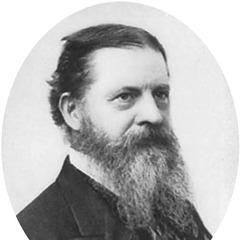
Charles Sanders Peirce
Charles Sanders Peirce was an American philosopher, logician, and scientist, born on September 10, 1839, and died on April 19, 1914. Known as the founder of modern symbolic logic, Peirce's philosophical ideas have had a profound impact on fields such as logic, philosophy of science, and cognitive science. more
You May Also Like
Source: Collected papers of Charles Sanders Peirce
Source: Collected Papers
Source: The Essential Peirce, Volume 1: Selected Philosophical Writings? (1867–1893)
Source: Collected papers of Charles Sanders Peirce
Source: Collected Papers
Source: The collected papers of Charles Sanders Peirce: pragmatism and pragmaticism
Source: Selected Writings (Values in a Universe of Chance)
“The trials of living and the pangs of disease make even the short span of life too long.”