Quotessence
Home / Quotes / Quote by Charles Sanders Peirce

Quote by Charles Sanders Peirce

“It has often been argued that absolute scepticism is self-contradictory; but this is a mistake: and even if it were not so, it would be no argument against the absolute sceptic, inasmuch as he does not admit that no contradictory propositions are true. Indeed, it would be impossible to move such a man, for his scepticism consists in considering every argument and never deciding upon its validity; he would, therefore, act in this way in reference to the arguments brought against him.”

Quote by Charles Sanders Peirce

Work

The Essential Peirce, Volume 1: Selected Philosophical Writings? (1867–1893)

This volume includes a selection of Peirce's writings that delve into the foundations of pragmatism, logic, and semiotics, showcasing his development as a leading philosopher of the late 19th century. more

Author
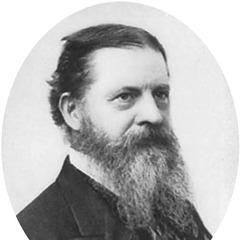
Charles Sanders Peirce

Charles Sanders Peirce was an American philosopher, logician, and scientist, born on September 10, 1839, and died on April 19, 1914. Known as the founder of modern symbolic logic, Peirce's philosophical ideas have had a profound impact on fields such as logic, philosophy of science, and cognitive science. more

You May Also Like

“Theoretically, I grant you, there is no possibility of error in necessary reasoning. But to speak thus "theoretically," is to uselanguage in a Pickwickian sense. In practice, and in fact, mathematics is not exempt from that liability to error that affects everything that man does.”

“I think of consciousness as a bottomless lake, whose waters seem transparent, yet into which we can clearly see but a little way.But in this water there are countless objects at different depths; and certain influences will give certain kinds of those objects an upward influence which may be intense enough and continue long enough to bring them into the upper visible layer. After the impulse ceases they commence to sink downwards.”

“A sign, or representamen, is something which stands to somebody for something in some respect or capacity. It addresses somebody,that is, creates in the mind of that person an equivalent sign, or perhaps a more developed sign. That sign which it creates I call the interpretant of the first sign. The sign stands for something, its object. It stands for that object, not in all respects, but in reference to a sort of idea, which I have sometimes called the ground of the representamen.”

“The method of authority will always govern the mass of mankind; and those who wield the various forms of organized force in the state will never be convinced that dangerous reasoning ought not to be suppressed in some way.”

“Three elements go to make up an idea. The first is its intrinsic quality as a feeling. The second is the energy with which it affects other ideas, an energy which is infinite in the here-and-nowness of immediate sensation, finite and relative in the recency of the past. The third element is the tendency of an idea to bring along other ideas with it.”

“The percept is the reality. It is not in propositional form. But the most immediate judgment concerning it is abstract. It is therefore essentially unlike the reality, although it must be accepted as true to that reality. Its truth consists in the fact that it is impossible to correct it, and in the fact that it only professes to consider one aspect of the percept.”

“One will meet, for example, the virtual assumption that what is relative to thought cannot be real. But why not, exactly? Red is relative to sight, but the fact that this or that is in that relation to vision that we call being red is not itself relative to sight; it is a real fact.”