“REFUSAL, n. Denial of something desired; Refusals are graded in a descending scale of finality thus: the refusal absolute, the refusal condition, the refusal tentative and the refusal feminine. The last is called by some casuists the refusal assentive.”
Quote by Ambrose Bierce
Work
Delphi Complete Works of Ambrose Bierce (Illustrated)
The Delphi Complete Works of Ambrose Bierce (Illustrated) is a comprehensive compilation of the author's writings, featuring his most famous works such as 'The Cask of Amontillado' and 'An Occurrence at Owl Creek Bridge.' The illustrated format enhances the reader's experience with visual elements that complement Bierce's distinctive narrative voice. more
Author
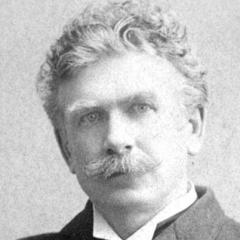
Ambrose Bierce
Ambrose Bierce was an American journalist, satirist, and editor, renowned for his sharp wit and dark humor. He is best known for his satirical novel 'The Devil's Dictionary' and his short stories. Bierce was born on June 24, 1842, and his exact date of death remains unknown, as he disappeared during the American Civil War. more
You May Also Like
“The delight that consumes the desire, The desire that outruns the delight.”
Source: Poems and Ballads
Source: The Philosopher's Kiss: A Novel
Source: The Philosopher's Kiss: A Novel