“One day the last portrait of Rembrandt and the last bar of Mozart will have ceased to be — though possibly a colored canvas and a sheet of notes will remain — because the last eye and the last ear accessible to their message will have gone.”
Quote by Oswald Spengler
Work
The Decline of the West...: Form and actuality
This book delves into the complexities of Western civilization's evolution, examining the factors contributing to its perceived decline. It offers a critical examination of cultural, political, and social trends, providing a nuanced perspective on the future of the West. more
Author
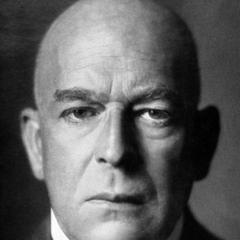
Oswald Spengler
Oswald Spengler was a German philosopher and historian, born on May 29, 1880, and died on May 8, 1936. He is best known for his work 'The Decline of the West', which proposed a theory of cultural cycles, suggesting that civilizations and cultures follow a cycle of growth, maturity, and decline. more
You May Also Like
Source: The Decline of the West...: Perspectives of world-history
“All world-improvers are Socialists. And consequently there are no Classical world-improvers.”
Source: The decline of the West
Source: Aphorisms
“Tension without cosmic pulsation to animate it is the transition to nothingness”
Source: The Decline of the West...: Perspectives of world-history
“When the Englishman speaks of national wealth he means the number of millionaires in the country.”
Source: Selected essays
“One cannot learn how to be creative by reading Marx. Either one is creative or one is not.”
Source: Selected essays
“If few can stand a long war without deterioration of soul, none can stand a long peace.”
Source: Hour Decision
Source: The decline of the West