Quotessence
Home / Quotes / Quote by Edward Gibbon

Quote by Edward Gibbon

“The brutal soldiers satisfied their sensual appetites without consulting either the inclination or the duties of their female captives; and a nice question of casuistry was seriously agitated, Whether those tender victims, who had inflexibly refused their consent to the violation which they sustained, had lost, by their misfortune, the glorious crown of virginity. There were other losses indeed of a more substantial kind and more general concern.”

Quote by Edward Gibbon

Work

The History of the Decline and Fall of the Roman Empire

This seminal work provides an in-depth exploration of the political, social, and economic factors that contributed to the fall of one of the greatest empires in history. more

Author
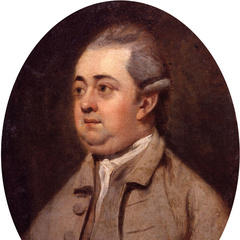
Edward Gibbon
Edward Gibbon

Edward Gibbon was an English historian renowned for his magnum opus, 'The History of the Decline and Fall of the Roman Empire'. His work has had a profound impact on historical studies. more

You May Also Like

“In less than seven years the vestiges of the Gothic invasion were almost obliterated, and the city appeared to resume its former splendour and tranquillity. The venerable matron replaced her crown of laurel, which had been ruffled by the storms of war, and was still amused in the last moment of her decay with the prophecies of revenge, of victory, and of eternal dominion.”

“But the desire of obtaining the advantages, and of escaping the burthens, of political society, is a perpetual and inexhaustible source of discord; nor can it reasonably be presumed that the restoration of British freedom was exempt from tumult and faction. The pre-eminence of birth and fortune must have been frequently violated by bold and popular citizens; and the haughty nobles, who complained that they were become the subjects of their own servants, would sometimes regret the reign of an arbitrary monarch.”

“The division of the Roman world between the sons of Theodosius marks the final establishment of the empire of the East, which, from the reign of Arcadius to the taking of Constantinople by the Turks, subsisted one thousand and fifty-eight years in a state of premature and perpetual decay.”

“The pastoral labours of the archbishop of Constantinople provoked and gradually united against him two sorts of enemies; the aspiring clergy, who envied his success, and the obstinate sinners, who were offended by his reproofs. When Chrysostom thundered from the pulpit of St. Sophia against the degeneracy of the Christians, his shafts were spent among the crowd, without wounding or even marking the character of any individual.”

“The union of the Roman empire was dissolved; its genius was humbled in the dust; and armies of unknown barbarians, issuing from the frozen regions of the North, had established their victorious reign over the fairest provinces of Europe and Africa.”

“The laws of war, that restrain the exercise of national rapine and murder, are founded on two principles of substantial interest: the knowledge of the permanent benefits which may be obtained by a moderate use of conquest, and a just apprehension lest the desolation which we inflict on the enemy's country may be retaliated on our own. But these considerations of hope and fear are almost unknown in the pastoral state of nations.”

“The imprudent Maximus disregarded these salutary considerations: he gratified his resentment and ambition; he saw the bleeding corpse of Valentinian at his feet; and he heard himself saluted Emperor by the unanimous voice of the senate and people. But the day of his inauguration was the last day of his happiness.”