“If people were silent, nothing would change.”
Quote by Malala Yousafzai
Work
I Am Malala: How One Girl Stood Up for Education and Changed the World (Young Readers Edition)
In this young readers' edition, Malala Yousafzai shares her extraordinary journey from a young girl in rural Pakistan to an international advocate for education. The narrative covers her experiences facing oppression, her injury from a Taliban attack, and her subsequent rise as a Nobel Peace Prize laureate, highlighting her unwavering commitment to the cause of education for all. more
Author
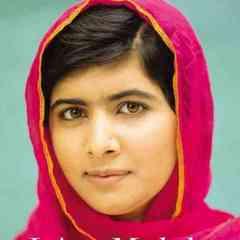
Malala Yousafzai
A Pakistani journalist born on July 12, 1997, in the Swat Valley of northwestern Pakistan. She is known for her advocacy of girls' education and became an international figure after surviving a Taliban shooting incident in 2012. In 2014, she became the youngest ever Nobel Peace Prize laureate. more
You May Also Like
“With guns you can kill terrorists, with education you can kill terrorism.”
Source: All Men Are Brothers
“If we had the atom bomb, we would have used it against the British.”
Source: The Essential Gandhi: An Anthology of His Writings on His Life, Work, and Ideas
Source: Collected Works of Mahatma Gandhi