Quotessence
Home / Quotes / Quote by Swami Vivekananda

Quote by Swami Vivekananda

Author

Swami Vivekananda
Swami Vivekananda

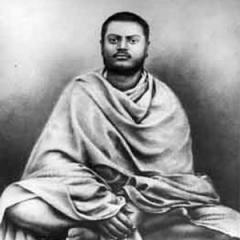
Swami Vivekananda (January 12, 1863 – July 4, 1902) was an Indian Hindu monk, philosopher, and social reformer. Born as Narendranath Datta in Kolkata, he was a chief disciple of the mystic Ramakrishna. He is best known for his historic speech at the 1893 Parliament of the World's Religions in Chicago, where he introduced Hinduism to the Western world. He founded the Ramakrishna Mission in 1897, focusing on social service, education, and interfaith harmony. His teachings emphasized self-realization, service to humanity, and the unity of all religions. He wrote extensively on yoga and Vedanta philosophy, influencing global spirituality and Indian nationalism. He died at the age of 39, leaving a lasting legacy as a bridge between Eastern and Western thought. more

You May Also Like

“If we have learned anything in the past ten years, it is that these lovely things about America were never lovely. We have been expansionist and aggressive and mean to other people from the beginning. And we've been aggressive and mean to people in this country, and we've allocated the wealth of this country in a very unjust way. We've never had justice in our courts for the poor people, for black people, for radicals. Now how can we boast that America is a very special place? It's not that special. It really isn't.”

“What is called “apathy” is, I believe, a feeling of helplessness on the part of the ordinary citizen, a feeling of impotence in the face of enormous power. It’s not that people are apathetic; they do care about what is going on, but don’t know what to do about it, so they do nothing, and appear to be indifferent.”

“I am convinced that imprisonment is a way of pretending to solve the problem of crime. It does nothing for the victims of crime, but perpetuates the idea of retribution, thus maintaining the endless cycle of violence in our culture. It is a cruel and useless substitute for the elimination of those conditions--poverty, unemployment, homelessness, desperation, racism, greed--which are at the root of most punished crime. The crimes of the rich and powerful go mostly unpunished.”

“When the Democrats are attacked for [inciting class warfare] they shrink back. They don't say what obviously should be said, "Yes, there is class warfare. There has always been class warfare in this country." The reason the Democrats shrink back is because the Democrats and the Republicans are on the same side of the class war. They have slightly different takes. The Democrats are part of the upper class that is more willing to make concessions to the lower class in order to maintain their power.”

“Indeed, it is impossible to be neutral. In a world already moving in certain directions, where wealth and power are already distributed in certain ways, neutrality means accepting the way things are now. It is a world of clashing interests – war against peace, nationalism against internationalism, equality against greed, and democracy against elitism – and it seems to me both impossible and undesirable to be neutral in those conflicts.”

“It had long been true, and prisoners knew this better than anyone, that the poorer you were the more likely you were to end up in jail. This was not just because the poor committed more crimes. In fact, they did. The rich did not have to commit crimes to get what they wanted; the laws were on their side. But when the rich did commit crimes, they often were not prosecuted, and if they were they could get out on bail, hire clever lawyers, get better treatment from judges. Somehow, the jails ended up full of poor black people.”