Quotessence
Home / Quotes / Quote by Howard Zinn

Quote by Howard Zinn

Work

Voices of a People's History of the United States

This book compiles a diverse range of voices, including those of slaves, Native Americans, women, and working-class individuals, to provide a comprehensive view of the United States from a grassroots perspective. more

Author
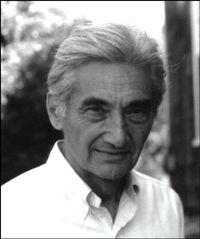
Howard Zinn
Howard Zinn

American historian known for his critical analysis of historical events and advocacy for social justice. His work emphasizes the connection between history and contemporary social issues, particularly focusing on the role of ordinary people in the historical process. more

You May Also Like

“Indeed, it is impossible to be neutral. In a world already moving in certain directions, where wealth and power are already distributed in certain ways, neutrality means accepting the way things are now. It is a world of clashing interests – war against peace, nationalism against internationalism, equality against greed, and democracy against elitism – and it seems to me both impossible and undesirable to be neutral in those conflicts.”

“It had long been true, and prisoners knew this better than anyone, that the poorer you were the more likely you were to end up in jail. This was not just because the poor committed more crimes. In fact, they did. The rich did not have to commit crimes to get what they wanted; the laws were on their side. But when the rich did commit crimes, they often were not prosecuted, and if they were they could get out on bail, hire clever lawyers, get better treatment from judges. Somehow, the jails ended up full of poor black people.”

“Scholars, who pride themselves on speaking their minds, often engage in a form of self-censorship which is called "realism." To be "realistic" in dealing with a problem is to work only among the alternatives which the most powerful in society put forth. It is as if we are all confined to a, b, c, or d in the multiple choice test, when we know there is another possible answer. American society, although it has more freedom of expression than most societies in the world, thus sets limits beyond which respectable people are not supposed to think or speak.”

“It's not right to respond to terrorism by terrorizing other people. And furthermore, it's not going to help. Then you might say, "Yes, it's terrorizing people, but it's worth doing because it will end terrorism." But how much common sense does it take to know that you cannot end terrorism by indiscriminately dropping bombs?”

“I came to the conclusion that war was an unacceptable way of solving whatever problems there were in the world--that there would be problems of tyranny, of injustice, of nations crossing frontiers and that injustice and tyranny should not be tolerated and should be fought and resisted, but the one thing that must not be used to solve that problem is war. Because war is inevitably the indiscriminate killing of large numbers of people. And that fact overwhelms whatever moral cause is somewhere buried in the history of that war.”

“What happened in World War II was what happened in war generally, and that was whatever the initiating cause, and however clear the moral reason is for the war in which one side looks better than the other, by the time the war ends both sides have been engaged in evil.”

“Behind the deceptive words designed to entice people into supporting violence -- words like democracy, freedom, self-defense, national security -- there is the reality of enormous wealth in the hands of a few, while billions of people in the world are hungry, sick, homeless.”

“While some multimillionaires started in poverty, most did not. A study of the origins of 303 textile, railroad and steel executives of the 1870s showed that 90 percent came from middle- or upper-class families. The Horatio Alger stories of "rags to riches" were true for a few men, but mostly a myth, and a useful myth for control.”