Quotessence
Home / Quotes / Quote by Edwin Hubbel Chapin

Quote by Edwin Hubbel Chapin

“The night comes for the purpose of checking our busy employment, and introducing an interval of repose between the links of our action and our aspiration. It draws its dim curtain around the field of toil. It buries the objects of our handiwork in darkness, and involves them with uncertainty. It comes to the relief of the exhausted body and the tired brain. Our powers, harmonizing with the diurnal revolutions of the earth, fail with the failing light, and a merciful Providence casts around us this mantle of shadow, and snatches us from our occupation.”

Quote by Edwin Hubbel Chapin

Author
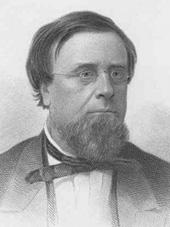
Edwin Hubbel Chapin
Edwin Hubbel Chapin

Edwin Hubbel Chapin was an American poet recognized for his romantic and patriotic verse. Born on December 29, 1814, in New York, he spent much of his life in the Midwest, particularly in Illinois and Indiana. His poetry often reflected his love for nature and his country, with works that included both individual and collective experiences. He passed away on December 26, 1880. more

You May Also Like

“The greatest successes grow out of great failures. In numerous instances the result is better that comes after a series of abortive experiences than it would have been if it had come at once; for all these successive failures induce a skill which is so much additional power working into the final achievement.... The hand that evokes such perfect music from the instrument has often failed in its touch, and bungled among the keys.... Every disappointed effort fences in and indicates the only possible path of success, and makes it easier to find.”

“The universe is a vast system of exchange. Every artery of it is in motion, throbbing with reciprocity, from the planet to the rotting leaf. The vapor climbs the sunbeam, and comes back in blessings upon the exhausted herb. The exhalation of the plant is wafted to the ocean. And so goes on the beautiful commerce of nature. And all because of dissimilarity--because no one thing is sufficient in itself, but calls for the assistance of something else, and repays by a contribution in turn.”

“The soul, like the body, acquires vigor by the exercise of all its faculties. In the midst of the world, in overcoming difficulties, in conquering selfishness, indolence, and fear--in all the occasions of duty, it employs, and reveals by employing, energies that render it efficient and robust--that broaden its scope, adjust its powers, and mature it with a rich experience.”