Quotessence
Home / Quotes / Quote by Robert Greene

Quote by Robert Greene

“If you want to be powerful in life you have to enjoy the process. You have to get pleasure out of making the thing that you're making. There has to be that kind of purpose behind it. If your purpose is simply gaining power, if that becomes your end in life then you end up sort of destroying yourself because you lose the sense of detachment that's very necessary.”

Quote by Robert Greene

Author
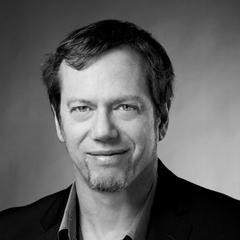
Robert Greene
Robert Greene

Robert Greene is an American author known for his works on power, strategy, and human behavior. His books delve into the principles of power operation and how individuals can achieve success in complex social environments. more

You May Also Like

“When these resources are degraded or polluted, then there are fewer of them for the rest of us, and then we start competing for them and eventually as we compete, there are those of us, who have the capacity, who have the ability to be the controllers, to decide who accesses them, how much they access, and eventually there is a conflict. Those who feel marginalized, those who feel excluded, eventually react in an effort to get their own justice, and we have conflict.”

“The way in which we can promote peace, is by promoting sustainable management of our resources, equitable distribution of these resources, and that the only way you can actually do that, is that then you have to have a political, economic system that facilitates that. And then you get into the issues of human rights, justice, economic justice, social justice, and good governance or democratic governance. That's how it ties up.”

“For me planting a tree is a very doable thing. It's not complicated, it doesn't require technology, it doesn't require much knowledge, but it can be a very important entry point into communities understanding how they destroy their own resources, but how they can also restore those resources, and not wait for their government or international agencies to come and help them.”

“I learned in America a long time ago, the three R's, the principle of three R's - reuse, reduce, recycle. And as I say those words, there are so many things individually we can do to reduce - we don't need to consume as much as we are consuming. Reduce. And by reusing, we can reuse a lot of things we just throw into the dumpsite. And reduce the production. The more we reuse, the more we can reduce.”

“Having studied biology really helped me a lot because I quickly understand how biological systems work, and how they fail, and the tragedy of when they fail, because we are dealing with life systems, and when we hear that a species has become extinct, or is threatened, you realize that this could mean that this species will disappear from the face of the earth forever! So that understanding really gives you energy to do something to save it.”

“Today with technological advancement, with the Internet, with planes, with the rate at which we travel - even if you wanted, you cannot hide from the rest of the world. And whether you like it or not, you are part of this global marketplace, and so you might as well understand it, you might as well embrace it, because even if you hide, it will find you.”

“The issue of climate change, it really does bring home the fact that we are on one planet, and that some of the impact of what human beings do in one corner of the world is going to affect people in a distant corner of the world. So we may still feel very far from each other, but we are really very close to each other because of the changes we have made with travel and technology and especially the information technology.”

“Sometimes when I talk to little children I remind them of the fact that when I was growing up myself, I used to play with frog eggs and tadpoles and I used to walk in the field, I used to literally copy whatever my mother was doing on the land. And that may be the reason why I eventually developed the passion for green and for the Earth. So it is extremely important for adults and especially those who are in charge of cities to make sure that we do not lose touch with the land and with the environment. And especially our children.”