Quotessence
Home / Quotes / Quote by Van Jones

Quote by Van Jones

“I think the most important thing is discovering an idea that moves you, and then letting people who are moved by that idea find each other, and work together. A lot of times people focus on the technical side-"oh, I've got to take a class on non-profit development." Too few people allow themselves to think outside the box with regard to their issue areas.”

Quote by Van Jones

Author
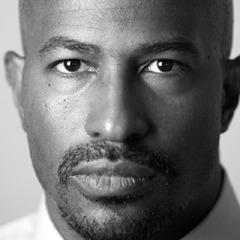
Van Jones
Van Jones

Van Jones is a civil rights advocate and political activist, born on September 20, 1968. He is known for his involvement in social and environmental justice movements, particularly in the fight against climate change and racial inequality. more

You May Also Like

“I think that for those of us who come from oppressed backgrounds and who do our work in marginalized communities, recovering our innocence is one of the most important acts of self-liberation and de-colonization. Not letting the requirement that we adapt to impossible circumstances and unconscionable crimes leave us shackled to the kind of cynicism and armor such that we can't breathe and laugh and magnetize to ourselves all the genius and love and support that we need to transform the situation. That's probably the biggest challenge, is to recover our innocence.”

“The best directing style is the one that lets me do whatever I want. Seriously though, I like to be challenged and I like to collaborate. I love finding the medium between what I think and what a director does. I hate when a director uses the "my way or the highway" approach. But it also sucks when they tell you everything you do is great and offer no input. It's a fine line a director has to walk. It is a hard job.”

“When I work there are two distinct phases: the phase of pushing the work along, getting something to happen, where all the input comes from me, and phase two, where things start to combine in a way that wasn't expected or predicted by what I supplied. Once phase two begins everything is okay, because then the work starts to dictate its own terms. It starts to get an identity which demands certain future moves. But during the first phase you often find that you come to a full stop.”

“Frequently, I go straight into the studio and see what's around. I might hire a couple of instruments that I've never used - maybe a particular type of electronic organ or an echo unit. Then I just dabble with sounds until something starts to happen that suggests a texture. The texture suggests some kind of mood, and the mood suggests some kind of lyric. That's like working in reverse, often quite the other way around, from sound to song. Although often they stop before they get to the song stage.”

“Another way of working is setting deliberate constraints that aren't musical ones - like saying, "Well, this piece is going to be three minutes and nineteen seconds long and it's going to have changes here, here and here, and there's going to be a convolution of events here, and there's going to be a very fast rhythm here with a very slow moving part over the top of it." Those are the sort of visual ideas that I can draw out on graph paper. I've done a lot of film music this way.”