Quotessence
Home / Quotes / Quote by Fritjof Capra

Quote by Fritjof Capra

“Hundreds of years ago, Indian artists created visual images of dancing Shivas in a beautiful series of bronzes. In our time, physicists have used the most advanced technology to portray the patterns of the cosmic dance. The metaphor of the cosmic dance thus unifies ancient mythology, religious art and modern physics.”

Quote by Fritjof Capra

Author
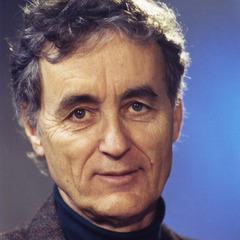
Fritjof Capra
Fritjof Capra

Fritjof Capra (born February 1, 1939) is an Austrian-born American physicist, systems theorist, and ecological thinker. He is best known for his 1975 book 'The Tao of Physics', which explores parallels between modern physics and Eastern mysticism. Capra advocates for deep ecology and systems thinking, integrating science, society, and ecology. His works, including 'The Turning Point' and 'The Web of Life', have influenced global environmental movements and interdisciplinary studies. He co-founded the Center for Ecoliteracy in Berkeley, California, promoting sustainable education. Capra's ideas have sparked both acclaim and criticism, but he remains a key figure in paradigm shift discourse. more

You May Also Like

“Modern physics had shown that the rhythm of creation and destruction is not only manifest in the turn of the seasons and in the birth and death of living creatures, but is also the very essence of inorganic matter. For modern physicists...Shiva's dance is the dance of subatomic matter.”

“Shallow ecology is anthropocentric, or human-centred. It views humans as above or outside nature, as the source of all value, and ascribes only instrumental, or 'use', value to nature. Deep ecology does not separate humans - or anything else - from the natural environment. It does see the world not as a collection of isolated objects but as a network of phenomena that are fundamentally interconnected and interdependent. Deep ecology recognizes the intrinsic value of all human beings and views humans as just one particular strand in the web of life.”

“Gradually, physicists began to realise that nature, at the atomic level, does not appear as a mechanical universe composed of fundamental building blocks, but rather as a network of relations, and that, ultimately, there are no parts at all in this interconnected web. Whatever we call a part is merely a pattern that has some stability and therefore captures our attention.”

“At this point in our global ecological crisis, the survival of humanity will require a fundamental shift in our attitude toward nature: from finding out how we can dominate and manipulate nature to how we can learn from her. In this brilliant and hopeful book, Jay Harman shows us how far the new field of Biomimicry has already progressed toward this goal. The Shark's Paintbrush makes for fascinating and joyful reading - much needed in these dark times.”