Quotessence
Home / Quotes / Quote by Mohsin Hamid

Quote by Mohsin Hamid

“You know, very often, if you look at the kinds of communications that they're getting in an ISIS recruiting video, the videos that, you know, that one hears of as radicalizing them, these are like action movies. And so in the sense, it's that by closing off the idea that young Muslims and particularly young Muslim men can be American heroes, it increases the chance that they'll try to be some other kind of hero. And that, I think, is entirely counterproductive.”

Quote by Mohsin Hamid

Author
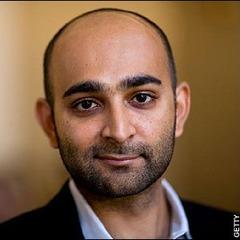
Mohsin Hamid
Mohsin Hamid

Mohsin Hamid is a Pakistani-British writer born in Karachi in 1971. His works often explore themes of globalization, identity, and modernity. Hamid's debut novel, 'The Reluctant Fundamentalist,' published in 2001, received widespread acclaim and earned him numerous awards. His other notable works include 'How to Get Filthy Rich in Rising Asia' and 'The Reluctant Fundamentalist'. more

You May Also Like

“In Pakistan, many of the young people read novels because in the novels, not just my novels but the novels of many other Pakistani writers, they encounter ideas, notions, ways of thinking about the world, thinking about their society that are different. And fiction functions in a countercultural way as it does in America and certainly as it did in the, you know, '60s.”

“I feel engaged with young people in Pakistan. But that said, it's still a small minority that reads novels, literary fiction. But it isn't necessarily a small minority of the wealthy elite in the city of Lahore. It can often be and I often do meet at literary festivals students who've ridden a bus 12 hours from a very small town just to hear some of their favorite writers come and speak.”

“Living in a place like Pakistan, very often you meet people who are migrating abroad. And sometimes you'll ask their parents, you know - you didn't try to stop them? Like, why didn't you say, don't go - I'll miss you? Stay with me. And, you know, people say, well, it's best for them. They have to go. And parents, you know, take on that sadness because they know it's better for their children if they leave.”

“We can open up our computers and Skype with someone, and we see them. It's like looking through a window. And we can surf the internet through our phones, and it's like our consciousness is far away. Or we can step through a airplane door and be in another continent a few hours away. So technology feels, to me, like the doors sort of already exist, at least emotionally.”