Quotessence
Home / Quotes / Quote by Thomas Merton

Quote by Thomas Merton

“Life consists in learning to live on one's own, spontaneous, freewheeling: to do this one must recognize what is one's own-be familiar and at home with oneself. This means basically learning who one is, and learning what one has to offer to the contemporary world, and then learning how to make that offering valid.”

Quote by Thomas Merton

Work

Love and Living

This book delves into the multifaceted nature of love, examining its various forms and its profound impact on the human condition. It offers a reflective journey through the intricacies of life, inviting readers to ponder the essence of existence and the role of love within it. more

Author

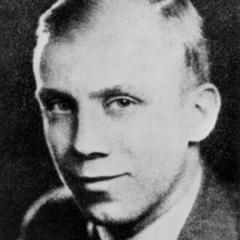
Thomas Merton
Thomas Merton

Thomas Merton (January 31, 1915 - December 10, 1968) was an American writer, poet, social critic, and mystic. His works covered a wide range of topics including philosophy, religion, and social justice, and were highly appreciated by readers. more

You May Also Like

“Perhaps peace is not, after all, something you work for, or 'fight for.' It is indeed 'fighting for peace' that starts all the wars. What, after all, are the pretexts of all these Cold War crises, but 'fighting for peace?' Peace is something you have or do not have. If you are yourself at peace, then there is at least some peace in the world. Then share your peace with everyone, and everyone will be at peace.”

“My own personal task is not simply that of poet and writer (still less commentator, pseudo-prophet); it is basically to praise God out of an inner center of silence, gratitude, and 'awareness.' This can be realized in a life that apparently accomplishes nothing. Without centering on accomplishment or nonaccomplishment, my task is simply the breathing of this gratitude from day to day, in simplicity, and for the rest turning my hand to whatever comes, work being part of praise, whether splitting logs or writing poems, or best of all simple notes.”

“After all, what is your personal identity? It is what you really are, your real self. None of us is what he thinks he is, or what other people think he is, still less what his passport says he is. And it is fortunate for most of us that we are mistaken. We do not generally know what is good for us. That is because, in St. Bernard's language, our true personality has been concealed under the 'disguise' of a false self, the ego, whom we tend to worship in place of God.”

“In general, it can be said that no contemplative life is possible without ascetic self-discipline. One must learn to survive without the habit-forming luxuries which get such a hold on men today. I do not say that to be a contemplative one absolutely has to go without smoking or without alcohol, but certainly one must be able to use these things without being dominated by an uncontrolled need for them.”

“The basic problem is not political, it is apolitical and human. One of the most important things to do is to keep cutting deliberately through political lines and barriers and emphasizing the fact that these are largely fabrications and that there is another dimension, a genuine reality, totally opposed to the fictions of politics: the human dimension which politics pretend to arrogate entirely to themselves. This is the necessary first step along the long way toward the perhaps impossible task of purifying, humanizing and somehow illuminating politics themselves.”