“Now there is no normal process except death which completely clears the brain from all past impressions; and after death, it is impossible to set it going again. Of all normal processes, sleep comes the nearest to a non-pathological clearing. How often we find that the best way to handle a complicated worry or an intellectual muddle is to sleep over it! However, sleep does not clear away the deeper memories, nor indeed is a sufficiently malignant state of worry compatible with an adequate sleep. We are thus often forced to resort to more violent types of intervention in the memory cycle. The more violent of these involve a surgical intervention into the brain, leaving behind it permanent damage, mutilation, and the abridgment of the powers of the victim, as the mammalian central nervous system seems to possess no powers whatever of regeneration. The principal type of surgical intervention which has been practiced is known as prefrontal lobotomy, and consists in the removal or isolation of a portion of the prefrontal lobe of the cortex. It has recently been having a certain vogue, probably not unconnected with the fact that it makes the custodial care of many patients easier. Let me remark in passing that killing them makes their custodial care still easier. However, prefrontal lobotomy does seem to have a genuine effect on malignant worry, not by bringing the patient nearer to a solution of his problems but by damaging or destroying the capacity for maintained worry, known in the terminology of another profession as the conscience. More generally, it appears to limit all aspects of the circulating memory, the ability to keep in mind a situation not actually presented. The various forms of shock treatment—electric, insulin, metrazol—are less drastic methods of doing a very similar thing. They do not destroy brain tissue or at least are not intended to destroy it, but they do have a decidedly damaging effect on the memory. In so far as this concerns the circulating memory, and in so far as this memory is chiefly damaged for the recent period of mental disorder, and is probably scarcely worth preserving anyhow, shock treatment has something definite to recommend it as against lobotomy; but it is not always free from deleterious effects on the permanent memory and the personality. As it stands at present, it is another violent, imperfectly understood, imperfectly controlled method to interrupt a mental vicious circle. This does not prevent its being in many cases the best thing we can do at present.”
Quote by Norbert Wiener
Work
Cybernetics: or the Control and Communication in the Animal and the Machine
Browse quotes and source details for this work. more
Author
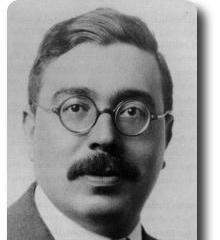
Norbert Wiener
Norbert Wiener, born on November 26, 1894, and died on March 18, 1964, was an American mathematician and a founding figure in the field of cybernetics. Known as the 'father of the information age,' Wiener made significant contributions to mathematics, physics, and engineering, particularly in the areas of stochastic processes, Fourier analysis, and control theory. more
You May Also Like
“You lot need therapy. Or a lobotomy.”
Source: The Crows
Source: The Way of Kings
“I exist. I do what is needed. Eventually, I will no longer exist. That is enough.”
Source: Wind and Truth
Source: Moral Kiosk
Source: Blue House: Ten Years on The Way Home
Source: Savitri: A Legend and a Symbol
“Every setback contains the seed of a greater comeback”
Source: MENTAL TOUGHNESS: Unbreakable Mind
Source: The Night Circus