Quotessence
Home / Quotes / Quote by Andrei Platonov

Quote by Andrei Platonov

“The road was overgrown with dry, dust-decrepit grass. Whenever Zakhar Pavlovich sat to smoke, he saw pleasant forests on the ground, where the grass was trees. It was a complete little living world, with its own roads, its own warmth, and complete supplies for the everyday needs of the petty, preoccupied creatures. Zakhar Pavlovich kept the ants in his head for about three miles of his way after watching them, and finally thought, If only we were given ant or mosquito reason, then life could be smoothed over right away, without problems. Those minor things are great masters of the harmonious life. A man's a long way from that nimble fellow, the ant.”

Quote by Andrei Platonov

Work

Chevengur

Browse quotes and source details for this work. more

Author

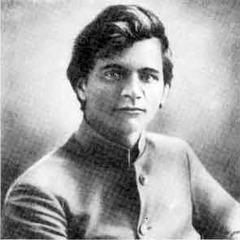
Andrei Platonov
Andrei Platonov

Andrei Platonov was a Russian author born on August 28, 1899, and died on January 5, 1951. Known for his unique literary style and profound insights into Soviet society, Platonov is recognized for his significant contributions to 20th-century Russian literature. more

You May Also Like

“Chu considered how to describe his feelings about Nelson. Finally, after digging through his mental storehouse of erudition, he settled on the words he wanted and spoke again. "There is an American author, Flannery O'Connor. She wrote something about one of her characters that I think may explain this man. To paraphrase . . . he could have been a good man if there had been someone there to shoot him every minute of his life.”

“Ants owe their superiority to their terrestrial life. This assertion may seem paradoxical, but consider the exceptional advantages afforded by a terrestrial medium to the development of their intellectual faculties, compared with an aerial medium! In the air there are the long flights without obstacles, the vertiginous journeys far from real bodies, the instability, the wandering about, the endless forget fulness of things and oneself. On the earth, on the contrary, there is not a movement that is not a contact and does not yield precise information, not a journey that fails to leave some reminiscence ; and as these journeys are determinate, it is inevitable that a portion of the ground incessantly traversed should be registered, together with its resources and its dangers, in the animal's imagination. Thus here results a closer and much more direct communication with the external world.”

“Ants owe their superiority to their terrestrial life. This assertion may seem paradoxical, but consider the exceptional advantages afforded by a terrestrial medium to the development of their intellectual faculties, compared with an aerial medium! In the air there are the long flights without obstacles, the vertiginous journeys far from real bodies, the instability, the wandering about, the endless forgetfulness of things and oneself. On the earth, on the contrary, there is not a movement that is not a contact and does not yield precise information, not a journey that fails to leave some reminiscence ; and as these journeys are determinate, it is inevitable that a portion of the ground incessantly traversed should be registered, together with its resources and its dangers, in the animal's imagination. Thus here results a closer and much more direct communication with the external world.”

“Squatting in the coppery mud of the drainage ditch behind my cousin’s house, we searched for fish, saw none. We found a speckled frog instead, unspooling a long, gelatinous thread of black eggs in the water. Then fire ants— my feet a blaze of pain, a fumbling dance, and fact and memory begin to stutter. What happened next? What curses did I utter? And how did I ever get back over the fence? I remember having a kind of reverence for the whole affair: the pity I got, each bite growing large and lustrous as a pearl, my tight and swollen toes. I must have liked the pain. What else would make me prod again, again? A whole week hobbling barefoot on the lawn, and still I missed the welts when they were gone.”

“Because the farming ants have practiced the mutual co-adaptation model during millions of years of relentless natural selection on joint performance, they often surpass us in specific efficiency targets. Not only did ants in general evolve sperm banks at ambient temperature that last a queen’s potential life span of two to three decades (Den Boer et al. 2009), but they also somehow prevented the evolution of resistance by specialized Escovopsis garden pathogens against biocontrol compounds obtained from Actinobacteria that they rear on their cuticles (De Man et al. 2016; Holmes et al. 2016; Heine et al. 2018) (chapter 11, this volume). Recent work has further indicated that the fungus-growing termites are equally efficient in keeping their colonies as free from pathogens as the leaf-cutting ants appear to be (Otani et al. 2019; see also figure 5.1C, D, E). Relative to the extreme specialization of social insect farmers, human farmers are jacks of all trades in their interactions with domesticated crops, and we remain extremely vulnerable to endemic and epidemic diseases of our cultivars.”

“It occurred to Nelson, in a terrible reverie, that he had greatly underestimated these ants. That there could be dimensions to what was happening that were beyond him and that he couldn't possibly anticipate. That perhaps the ants were possessors of some kind of true intellect, capable of laying plans and responding to surprises in ways that were far more than instinctual. He drew his sidearm and whispered, almost to himself. "Run.”