Quotessence
Home / Quotes / Quote by Flannery O'Connor

Quote by Flannery O'Connor

“The type of mind that can understand good fiction is not necessarily the educated mind, but it is at all times the kind of mind that is willing to have its sense of mystery deepened by contact with reality, and its sense of reality depend by contact with mystery. Fiction should be both canny and uncanny. In a good deal of popular criticism, there is the notion operating that all fiction has to be about the Average Man, and has to depict average ordinary everyday life, that every fiction writer must produce what used to be called "a slice of life." But if life, in that sense, satisfied us, there would be no sense in producing literature at all.”

Quote by Flannery O'Connor

Work

Mystery and Manners: Occasional Prose

This book is a compilation of essays that delve into a range of topics, offering insights into the author's perspectives on literature, art, and personal anecdotes. more

Author
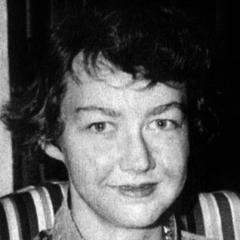
Flannery O'Connor
Flannery O'Connor

Flannery O'Connor was an American writer known for her unique Southern background and profound religious themes. Her works often explore moral and religious issues through satire and humor, with her novels 'Wise Blood' and 'The Violent Bear It Away' being among her most famous. more

You May Also Like

“Yorick's Used and Rare Books had a small storefront on Channing but a deep interior shaded by tall bookcases crammed with history, poetry, theology, antiquated anthologies. There was no open wall space to hang the framed prints for sale, so Hogarth's scenes of lust, pride, and debauchery leaned rakishly against piles of novels, folk tales, and literary theory. In the back room these piles were so tall and dusty that they took on a geological air, rising like stalagmites. Jess often felt her workplace was a secret mine or quarry where she could pry crystals from crevices and sweep precious jewels straight off the floor. As she tended crowded shelves, she opened one volume and then another, turning pages on the history of gardens, perusing Edna St. Vincent Millay: "We were very tired, were very merry, / We had gone back and forth all night on the ferry..." dipping into Gibbon: "The decline of Rome was the natural and inevitable effect of immoderate greatness. Prosperity ripened the principle of decay..." and old translations of Grimm's Fairy Tales: "They walked the whole day over meadows, fields, and stony places. And when it rained, the little sister said, 'Heaven and our hearts are weeping together...”

“For two weeks every August, the normally private Charlotte Square opens its gates to admit the literary masses. Huge white tents block views of the iron railings that normally keep everyone out, and picnic tables and pastel deck chairs circle the equestrian statue of Prince Albert in the middle of the lawn, inviting readers to relax with their newest signed novel. The tents fill with crowds to see every sort of author: high-flying politicos touting bestselling memoirs; writers of fantasy, chick-lit, sci-fi, young adult (and every possible combination of those). Authors and illustrators enthrall throngs of preschoolers and parents; up-and-comers present their work for appreciative and encouraging audiences. Books are signed by the hundreds and set out for sale in the inviting bookshop tents. People bask in the sunshine, when there is any, or gather in the café tent and grumble good-naturedly about the rain. They shake hands; gush "I love your work"; add to their "to be read" lists, and leave carrying new hardbacks in handy Book Festival-branded tote bags.”

“As it happens, I have a terrible weakness for books." "What kinds of books?" "All kinds." Her white shoulders lifted in a charming little shrug, momentarily fascinating him. "History, science, natural philosophy." "Really?" Born and bred for action, he had never been much of a scholar himself. "Oh, yes. The ancients. Traveler's tales. And... Gothic novels," she admitted, biting her lip with an impish twinkle in her eyes. "Ghosts and curses and such.”