“A species is a reproductive community of populations reproductively isolated from others that occupies a specific niche in nature.”
Quote by Ernst Mayr
Work
The Growth of Biological Thought: Diversity, Evolution, and Inheritance
This comprehensive study delves into the evolution of biological thought, tracing the progression of ideas and theories related to biodiversity, evolutionary processes, and the mechanisms of inheritance. The book offers a detailed examination of key figures, scientific discoveries, and philosophical debates that have shaped the field of biology over time. more
Author
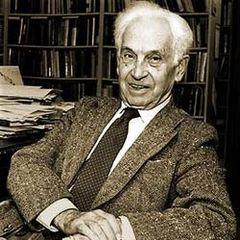
Ernst Mayr
German-American biologist and a pioneer in evolutionary biology, Ernst Mayr made significant contributions to the development of modern evolutionary theory. His research in systematics, speciation, and biological classification had a profound impact on the field. more
You May Also Like
Source: The Structure of Scientific Revolutions
Source: The Structure of Scientific Revolutions: 50th Anniversary Edition
“I just had my 30th birthday and we went turkey shooting. It's what I wanted to do, so we went.”
Source: Bertrand Russell on God and Religion
Source: Common School Journal
“If you say what you think don't expect to hear only what you like.”
“Unity, to be real, must stand the severest strain without breaking.”
Source: Communal Unity