Quotessence
Home / Quotes / Quote by Charles Lindbergh

Quote by Charles Lindbergh

“Possibly everyone will travel by air in another fifty years. I'm not sure I like the idea of millions of planes flying around overhead. I love the sky's unbroken solitude. I don't like to think of it cluttered up by aircraft, as roads are cluttered up by cars. I feel like the western pioneer when he saw barbed-wire fence lines encroaching on his open plains. The success of his venture brought the end of the life he loved.”

Quote by Charles Lindbergh

Author
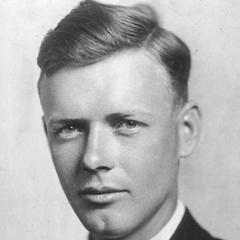
Charles Lindbergh
Charles Lindbergh

Charles Lindbergh, born on February 4, 1902, and died on August 26, 1974, was an American aviator renowned for his historic non-stop solo transatlantic flight in 1927. His flight, which he named 'The Spirit of St. Louis', not only broke records but also significantly advanced the field of aviation, inspiring generations of pilots. more

You May Also Like

“Nothing will stop us. The road to the stars is steep and dangerous. But we're not afraid . . . Space flights can't be stopped. This isn't the work of one man or even a group of men. It is a historical process which mankind is carrying out in accordance with the natural laws of human development.”

“I know that some knowledgeable people fear that although we might be willing to spend a couple of billion dollars in 1958, because we still remember the humiliation of Sputnik last October, next year we will be so preoccupied by color television, or new-style cars, or the beginning of another national election, that we will be unwilling to pay another year's installment on our space conquest bill. For that to happen well, I'd just as soon we didn't start.”

“Although humans today remain more capable than machines for many tasks, by 2030 machine capabilities will have increased to the point that humans will have become the weakest component in a wide array of systems and processes. Humans and machines will need to become far more closely coupled, through improved human-machine interfaces and by direct augmentation of human performance”