“From this hour I ordain myself loos'd of limits and imaginary lines. Going where I list, my own master, total and absolute. Listening to others, and considering well what they say. Pausing, searching, receiving, contemplating. Gently but with undeniable will, divesting myself of the holds that would hold me.”
Quote by Walt Whitman
Work
Annotated LEAVES OF GRASS with English Grammar Exercises: by Walt Whitman (Author), Robert Powell (Editor)
Annotated LEAVES OF GRASS with English Grammar Exercises is a critical edition of the renowned poet Walt Whitman's LEAVES OF GRASS. It includes detailed annotations and exercises designed to enhance readers' understanding of both the poetry and the English language. The annotations provide insight into the text's historical context and literary significance, while the grammar exercises offer practical language practice. more
Author
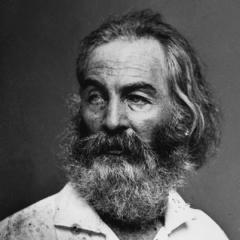
Walt Whitman
American poet, considered one of the pioneers of American poetry. His work, 'Leaves of Grass,' has had a profound impact on American poetry. more
You May Also Like
Source: Basic Writings of Nietzsche
“People with healthy self-esteem do not need to create pretend identities.”
Source: Rock My Soul: Black People and Self-Esteem
Source: On the contrary
“I shall go wherever I am asked to participate for freedom.”
Source: THE TRUE BELIEVER
Source: Tomorrow's God: Our Greatest Spiritual Challenge