“Indeed, we need not look back half a century to times which many now living remember well, and see the wonderful advances in the sciences and arts which have been made within that period. Some of these have rendered the elements themselves subservient to the purposes of man, have harnessed them to the yoke of his labors and effected the great blessings of moderating his own, of accomplishing what was beyond his feeble force, and extending the comforts of life to a much enlarged circle, to those who had before known its necessaries only.”
Quote by Thomas Jefferson
Work
Crusade Against Ignorance
This book delves into the various forms of ignorance prevalent in society and examines the strategies and initiatives employed to educate and enlighten individuals, fostering a more informed and enlightened populace. more
Author
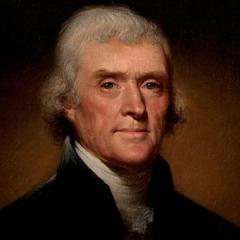
Thomas Jefferson
Thomas Jefferson was the third President of the United States, a distinguished politician, philosopher, architect, and scientist. He was born on April 13, 1743, and died on July 4, 1826. Jefferson advocated for democracy and freedom in politics and was one of the main authors of the Declaration of Independence. His political ideas had a profound impact on the founding and development of the United States. more
You May Also Like
Source: The spectator
“It is the greatest of crimes to depress true art and science.”
Source: The Portable William Blake
Source: Novum Organon Renovatum
“There is no patriotic art and no patriotic science.”
Source: Goethe's world view: presented in his reflections and maxims
Source: The life of Samuel Johnson, LL. D., comprehending an account of his studies, and numerous works, in chronological order: a series of his epistolary correspondence and conversations with many eminent persons; and various original pieces of his composition, never before published; the whole exhibiting a view of literature and literary men in Great Britain, for near half a century during which he flourished