Quotessence
Home / Quotes / Quote by Edward Gibbon

Quote by Edward Gibbon

“To resume, in a few words, the system of the Imperial government, as it was instituted by Augustus, and maintained by those princes who understood their own interest and that of the people, it may be defined an absolute monarchy disguised by the forms of a commonwealth. The masters of the Roman world surrounded their throne with darkness, concealed their irresistible strength, and humbly professed themselves the accountable ministers of the senate, whose supreme decrees they dictated and obeyed.”

Quote by Edward Gibbon

Work

THE HISTORY OF THE DECLINE AND FALL OF THE ROMAN EMPIRE (All 6 Volumes): From the Height of the Roman Empire, the Age of Trajan and the Antonines - to the Fall of Byzantium; Including a Review of the Crusades, and the State of Rome during the Middle Ages

This multi-volume work provides an in-depth examination of the Roman Empire's rise, its peak under emperors Trajan and the Antonines, and its eventual fall. It encompasses the state of Rome during the Middle Ages and includes a review of the Crusades. more

Author
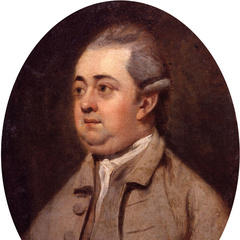
Edward Gibbon
Edward Gibbon

Edward Gibbon was an English historian renowned for his magnum opus, 'The History of the Decline and Fall of the Roman Empire'. His work has had a profound impact on historical studies. more

You May Also Like

“Augustus was sensible that mankind is governed by names; nor was he deceived in his expectation, that the senate and people would submit to slavery, provided they were respectfully assured that they still enjoyed their ancient freedom.”

“The two Antonines (for it is of them that we are now speaking) governed the Roman world forty-two years, with the same invariable spirit of wisdom and virtue. ... Their united reigns are possibly the only period of history in which the happiness of a great people was the sole object of government.”

“Antoninus diffused order and tranquility over the greatest part of the earth. His reign is marked by the rare advantage of furnishing very few materials for history; which is, indeed, little more than the register of the crimes, follies, and misfortunes of mankind.”

“The virtue of Marcus Aurelius Antoninus was of a severer and more laborious kind. It was the well-earned harvest of many a learned conference, of many a patient lecture, and many a midnight lucubration. At the age of twelve years, he embraced the rigid system of the Stoics, which taught him to submit his body to his mind, his passions to his reason; to consider virtue as the only good, vice as the only evil, all things external as things indifferent.”

“Yet the arts of Severus cannot be justified by the most ample privileges of state reason. He promised only to betray; he flattered only to ruin; and however he might occasionally bind himself by oaths and treaties, his conscience, obsequious to his interest, always released him from the inconvenient obligation.”

“His manners were less pure, but his character was equally amiable with that of his father. Twenty-two acknowledged concubines, and a library of sixty-two thousand volumes, attested the variety of his inclinations, and from the productions which he left behind him, it appears that the former as well as the latter were designed for use rather than ostentation.”

“The Germans, in the age of Tacitus, were unacquainted with the use of letters; and the use of letters is the principal circumstance that distinguishes a civilised people from a herd of savages incapable of knowledge or reflection. Without that artificial help, the human memory soon dissipates or corrupts the ideas intrusted to her charge; and the nobler faculties of the mind, no longer supplied with models or with materials, gradually forget their powers; the judgment becomes feeble and lethargic, the imagination languid or irregular.”

“The comparative view of the powers of the magistrates, in two remarkable instances, is alone sufficient to represent the whole system of German manners. The disposal of the landed property within their district was absolutely vested in their hands, and they distributed it every year according to a new division. At the same time, they were not authorised to punish with death, to imprison, or even to strike, a private citizen.”