“Now listen to the first three aims of the corporatist movement in Germany, Italy and France during the 1920s. These were developed by the people who went on to become part of the Fascist experience: (1) shift power directly to economic and social interest groups; (2) push entrepreneurial initiative in areas normally reserved for public bodies; (3) obliterate the boundaries between public and private interest -- that is, challenge the idea of the public interest. This sounds like the official program of most contemporary Western governments.”
Quote by John Ralston Saul
Work
The Unconscious Civilization
The book analyzes the transformation of Western democracies into systems where power operates through structured group negotiations rather than through active citizen participation. It explores how corporatist structures—encompassing business, labor, and government elites—have gradually supplanted genuine public discourse with technocratic management. The author argues that this arrangement produces a society of unconscious citizens who mistake the consumption of goods and media for meaningful civic involvement. The work traces historical developments in political philosophy and institutional design to show how language of individual rights and market freedom has been co-opted to serve concentrated power. It examines the role of managerial expertise in depoliticizing fundamental social choices, presenting policy decisions as neutral technical matters beyond ordinary comprehension. The text considers how education, journalism, and cultural production reinforce this unconscious state by narrowing the range of conceivable alternatives to existing arrangements. It discusses the tension between formal democratic procedures and substantive democratic practice, noting how electoral rituals persist while actual deliberation diminishes. The book reflects on possibilities for reawakening civic consciousness through renewed attention to the public good as distinct from aggregated private interests. It draws upon traditions of civic republicanism and social contract theory to suggest frameworks for more deliberate collective self-governance. The work has been discussed in contexts of political theory, media studies, and critiques of neoliberal governance. It emerged from concerns about declining voter engagement, rising inequality, and the perceived hollowing out of democratic institutions during the late twentieth century. The author's perspective as a former public servant and academic informs the analysis of how institutional incentives shape political behavior across multiple sectors of society. more
Author
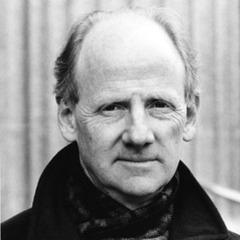
John Ralston Saul
John Ralston Saul is a Canadian author, political theorist, and public intellectual. He is known for his profound insights into democracy, civil society, and globalization. Saul's work covers a wide range of topics, including political philosophy, history, and cultural commentary. more
You May Also Like
Source: The Echoes of the Jazz Age Collection: The Beautiful and Damned, Winter Dreams, The Great Gatsby, Babylon Revisited, The Diamond as Big as the Ritz and many more
Source: Fahrenheit 451
Source: Butterfly Stories: A Novel
“Don't be afraid of enemies who attack you. Be afraid of the friends who flatter you.”
Source: How to Win Friends and Influence People