Quotessence
Home / Quotes / Quote by Horace Mann

Quote by Horace Mann

Work

Lecture on education

This book explores the foundational concepts and methodologies of educational theory and practice, offering insights into the development and improvement of educational systems. more
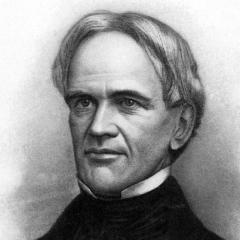
Author

Horace Mann
Horace Mann

Horace Mann, an American politician born on May 4, 1796 and died on August 2, 1859, played a significant role in the reform of American education and is known as the father of public education in the United States. more

You May Also Like

“The fear of speculation, the ostensible rush from the theoretical to the practical, brings about the same shallowness in action that it does in knowledge. It is by studying a strictly theoretical philosophy that we become most acquainted with Ideas, and only Ideas provide action with vigour and ethical meaning.”

“The essential difference between that knowledge which is, and that which is not conclusive evidence of Christian character, lies in this: the object of the one is the agreement of the several parts of a theological proposition; the object of the other is moral beauty, the intrinsic loveliness of God and Divine things. The sinner sees and hates; the saint sees and loves.”

“According to the technical language of old writers, a thing and its qualities are described as subject and attributes; and thus a man's faculties and acts are attributes of which he is the subject. The mind is the subject in which ideas inhere. Moreover, the man's faculties and acts are employed upon external objects; and from objects all his sensations arise. Hence the part of a man's knowledge which belongs to his own mind, is subjective: that which flows in upon him from the world external to him, is objective.”

“The notion that "applied" knowledge is somehow less worthy than "pure" knowledge, was natural to a society in which all useful work was performed by slaves and serfs, and in which industry was controlled by the models set by custom rather than by intelligence. Science, or the highest knowing, was then identified with pure theorizing, apart from all application in the uses of life; and knowledge relating to useful arts suffered the stigma attaching to the classes who engaged in them.”