Quotessence
Home / Quotes / Quote by Maggie O'Farrell

Quote by Maggie O'Farrell

“The role you've been ascribed in childhood can twist or break apart or seem outgrown, especially when you have your own family and begin to see your own childhood from a different angle. You remember. You reassess. I think that was the kernel of the novel for me. This idea that you change but that your family, the people you were born into, might find that change hard to accept. You no longer fit the mold you've always been ascribed. When the adult children in the book converge back on their small family home there's a sense that they don't fit there anymore.”

Quote by Maggie O'Farrell

Author
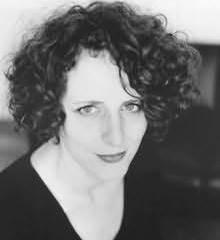
Maggie O'Farrell
Maggie O'Farrell

Maggie O'Farrell is an Irish author born in 1972. Her works are known for their deep character development and emotionally rich storytelling. O'Farrell's writing often focuses on family relationships and women's experiences, frequently exploring themes of love, marriage, and identity. more

You May Also Like

“My success was the shock of recognition, probably, rather than the quality of the work. I mean, the quality may have been fine, but there's a lot of fine work out there. It was the fact that I was doing something that at that time, nobody else was doing, except for say, Mort Saul out in San Francisco on The Hungry Eye, and "Second City" was emerging out in Chicago. Nothing in print. It was basically happening in cabaret and nothing in fiction. And certainly nothing in New York in cartoons.”

“I think all families have these secrets, and it's sometimes the strangest things that bring them out. That was part of my interest in the heatwave, in heat as a catalyst for uncovering truths. I was reading Alice in Wonderland to one of my kids recently, and I remembered that it starts on a really hot day. Alice falls asleep because of the heat; the whole story is predicated on falling into a heat-fueled dream.”

“That was exciting to be able to comment on civil rights. I mean, the civil rights movement that young people don't know about today, but Martin Luther King was considered by the establishment press in the early years of the sit-in movement as a dangerous man, and he was the equivalent at that time as Malcolm X. And he was told to stop his demonstrations; they were against the law and all of that. Now that he's sainted and sanctified we've forgotten.”

“Cartoons were very conservative. The country was very conservative. Although the liberals were allegedly in charge for a long time, there was a very acceptable balance what people would talk about in public. And I wanted to stretch those and move further out. And as the civil rights movement began, I started doing cartoons on that and on sit-ins and I was, along with Bill Mauldin, a great cartoonist out of World War II, arguably one of two white cartoonists doing this kind of work, Bill and me.”

“I met a retired police detective. And he said to me that the interesting thing about heatwaves, from a police perspective, is that the number of people who just walk out of their lives when the weather gets unbearable is astronomic. He said the police prepare themselves for it - for a huge rise in the instances of missing persons. People choose to disappear when it's hot. It was fascinating.”

“And all the things I thought were mistakes and I did cartoons on them. And then I think I was the first cartoonist in the country to attack the war in Viet Nam and that helped influence a whole generation of young cartoonists who later on took up the battle. And that was exciting to know that I had helped influence work of young people who were moving this forum into a better and more exciting area, out of the more by the state that political cartooning had been in.”

“Whether these were liberal publications or conservative publications, whether they were mainstream or slightly to the side of the mainstream; out of the mainstream, they all believed that they had the right to tell you how to stylize yourself. And from the New York Times to the much more left-winged nation. And The Voice said, no, whatever you want to. You drew whatever you want to, we'll publish it. Nobody was doing that. Nobody does it today. The Voice is no longer that paper, and editorializing is now in the hands of editors, with few exceptions.”