“She adored all beautiful things in their every curve and fragrance, so that they became part of her. Day by day, she gathered beauty; had she had no heart (she who was the bosom of womanhood) her thoughts would still have been as lilies, because the good is the beautiful.”
Quote by James M. Barrie
Work
The Little White Bird (Annotated Edition)
This annotated edition of J.M. Barrie's 'The Little White Bird' presents the original 1902 novel, which is notable for first introducing the character of Peter Pan. The story is set in London and combines elements of fantasy, social commentary, and autobiographical reflection. It follows a middle-aged bachelor who befriends a young boy and his mother, and includes the embedded narrative of Peter Pan, a boy who can fly and never grows up. The annotations in this edition provide contextual notes on the text, helping readers understand the historical and literary references within Barrie's work. more
Author
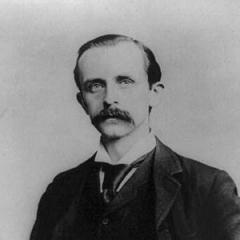
James M. Barrie
James M. Barrie, born on May 9, 1860, in Edinburgh, Scotland, and died on June 19, 1937, was a renowned British novelist and playwright. He is best known for his classic children's novel 'Peter Pan'. Barrie's unique literary style and contributions to children's literature have earned him widespread acclaim. more
You May Also Like
Source: The Book of Disquiet
“I bargain now. I offer buttons for his love.”
Source: Book of Mercy
“She was there, and she was the whole city, and that’s that.”
Source: Collected Poems
Source: Breakfast at Tiffany's
Source: Shogun a Novel of Japan
Source: William Faulkner, Eugene O'Neill [and] John Steinbeck