Quotessence
Home / Quotes / Quote by Benjamin Franklin

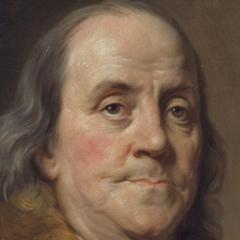
Quote by Benjamin Franklin

Author

Benjamin Franklin
Benjamin Franklin

Benjamin Franklin was a prominent figure in American history, serving as one of the Founding Fathers of the United States. He was a statesman, scientist, inventor, and writer, born on January 17, 1706, and died on April 17, 1790. Franklin is renowned for his contributions to electricity, his support for the American colonial independence movement, and his successful diplomatic efforts in France. more

You May Also Like

“Masonry, according to the general acceptation of the term, is an art founded on the principles of geometry, and devoted to the service and convenience of mankind. But Freemasonry, embracing a wider range and having a nobler object in view, namely, the cultivation and improvement of the human mind, may with more propriety be called a science, inasmuch as, availing itself of the terms of the former, it inculcates the principles of the purest morality, though its lessons are for the most part veiled in allegory and illustrated by symbols.”

“Masonry is too great an institution to have been made in a day, much less by a few men, but was a slow evolution through long time, unfolding its beauty as it grew. Indeed, it was like one of its own cathedrals which one generation of builders wrought and vanished, and another followed, until, amidst vicissitudes of time and change, of decline and revival, the order itself became a temple of Freedom and Fraternity.”

“Masonry was not made to divide men, but to unite them, leaving each man free to think his own thoughts and fashion his own system of ultimate truth. All its emphasis rests upon two extremely simple and profound principles, love of God and love of man.”

“Not all Masons are obligated on the Christian Bible. Masonry is universal and men of every creed are eligible for membership so long as they accept the Fatherhood of God and the Brotherhood of Man. Therefore, the candidate should be obligated on the Book of the Sacred Law which he accepts as such since his obligation is a solemn and binding one.”