“What is a scientist?... We give the name scientist to the type of man who has felt experiment to be a means guiding him to search out the deep truth of life, to lift a veil from its fascinating secrets, and who, in this pursuit, has felt arising within him a love for the mysteries of nature, so passionate as to annihilate the thought of himself.”
Quote by Maria Montessori
Work
The Montessori Reader
This book is a comprehensive collection of writings that delve into the principles and practices of the Montessori educational approach, offering insights into its history, methodology, and application in various educational settings. more
Author
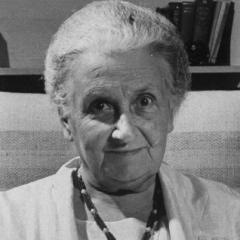
Maria Montessori
Maria Montessori, an Italian physician and educator, is known as the father of modern education. Born on August 31, 1870, in Ancona, Italy, she passed away on May 6, 1952. Dr. Montessori achieved remarkable success in the medical field, but she is most famous for her creation of the Montessori educational method, which emphasizes child-centered learning and individualized education. more
You May Also Like
Source: The substance of man
Source: The Art of the Theatre
Source: Atomic Physics and Human Knowledge
Source: Coningsby, etc
Source: The Pulse of Asia: A Journey in Central Asia Illustrating the Geographical Basis of History
“[The Constitution] is an experiment as all life is an experiment.”
Source: The Structure of Social Action: A Study in Social Theory with Special Reference to a Group of Recent European Writers